
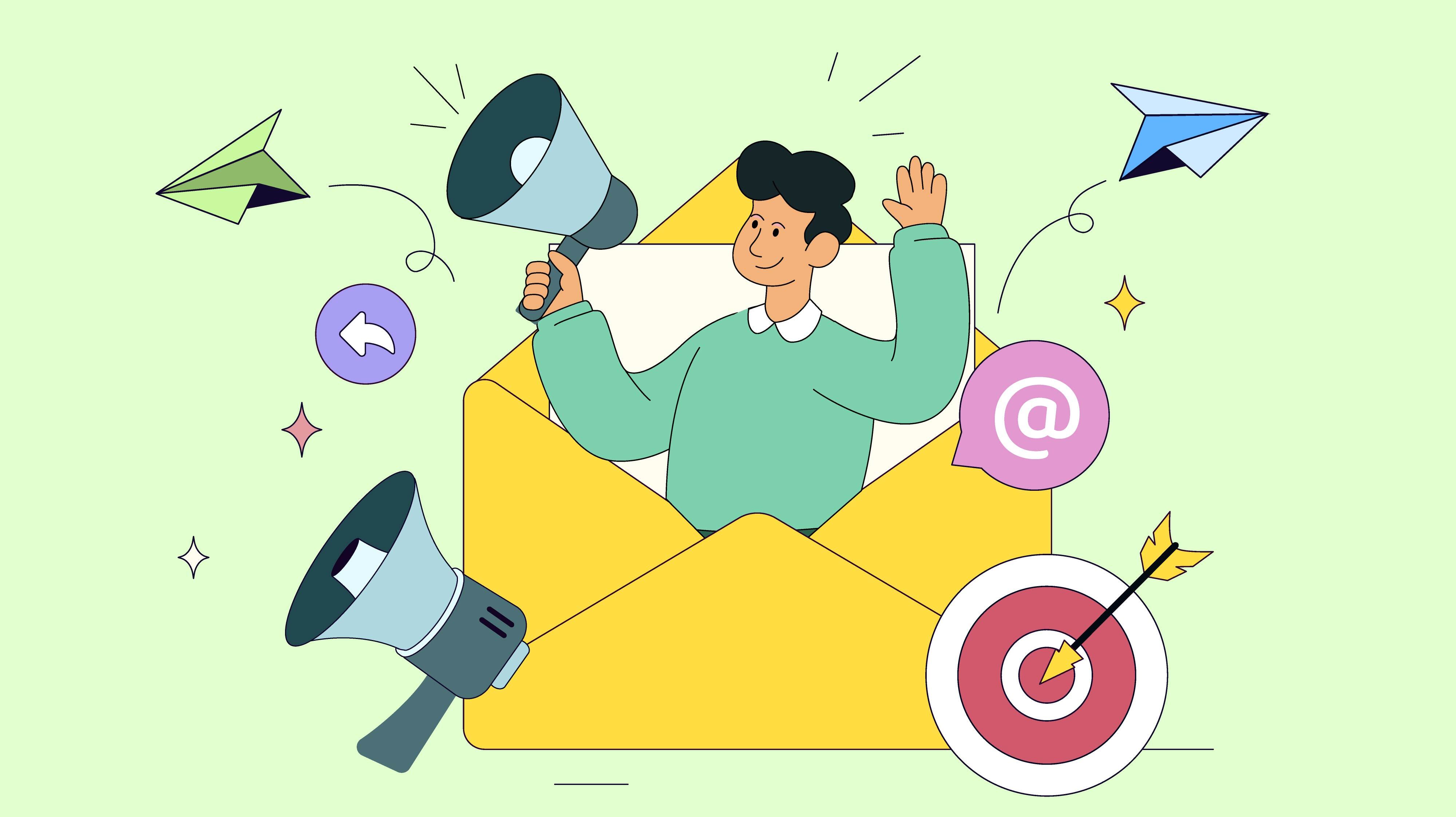


Every few years, a new channel arrives and someone announces that email is finally dead. Social media was going to kill it. Then messaging apps. Then push notifications. Then the algorithm-driven feed. None of it happened.
With social media becoming popular and a mainstream channel to connect with your target audience, everybody thought sending emails would be futile. But here we are, with email being one of the oldest and best performing marketing channels.
It has been proven to build trust, establish authority and maintain long-term relationships over time.
What is email marketing?
Unlike social media platforms where algorithm changes can limit visibility, email gives businesses direct access to their audience. Once someone subscribes to an email list, the company owns that communication channel and can consistently reach users without depending entirely on third-party platforms. It's one-on-one, personalized communication.
Email marketing is commonly used for:
- Product and feature announcements
- Discount campaigns and seasonal promotions
- Newsletter distribution
- Customer onboarding
- Lead nurturing
- Webinar and event invitations
- Policy or account updates
- Cart abandonment reminders
- Upsell and cross-sell campaigns
- Customer retention initiatives
Benefits of email marketing
The greatest advantage of email marketing is its scalability. Companies handle thousands to millions of subscribers and sending out manual emails to each one is impossible. This is where marketing automation makes consistent communication easier.
For example,
- A welcome email can automatically trigger when a user signs up.
- A follow-up sequence can begin after someone downloads an ebook.
- Cart abandonment reminders can be sent if a user leaves without purchasing.
- Re-engagement emails can target inactive subscribers automatically.
Another huge advantage is, companies send campaigns to thousands of subscribers for a fixed software subscription cost, making it highly cost-effective.
For example, sending an email to 10,000 subscribers does not cost 10 times more than sending one to 1,000 subscribers, making it highly scalable.
Email marketing also plays a major role in lead generation and relationship building. Educational newsletters, case studies, industry insights, and product updates help businesses stay visible throughout the buyer journey. Instead of constantly selling, effective email marketing focuses on providing value consistently so that trust builds over time.
For existing customers, email becomes a retention channel. Businesses use it to encourage repeat purchases, share new offerings, provide onboarding support, and strengthen long-term customer relationships.
15 categories of email marketing
Email marketing falls under three main umbrella categories: Transactional, Marketing, and Personal.
Transactional emails
Trigger action based on user specific action.
Examples include:
- Password reset emails
- Login verification codes
- Order confirmations
- Shipping notifications
- Payment receipts
- Account activity alerts
Results: improve customer trust, reduce support queries, strengthen user experience, and maintain engagement throughout the customer lifecycle
Marketing emails
Typical emails sent for promotion, brand awareness, product launches, company updates.
Examples include:
- Product promotions
- Discount campaigns
- Newsletter distribution
- Educational content
- Lead nurturing
- Event invitations
- Upselling and cross-selling
Results: primarily measured through opens, clicks, conversions, leads generated, and revenue generated. When executed well, they help businesses increase brand awareness, build relationships with prospects, generate pipeline, improve customer retention, and drive direct sales.
Personal/ business emails
Include both formal and informal communication. These are emails sent directly by one individual to another.
Examples include:
- Proposals
- Outreach emails
- Follow up and response email threads
- Renewal
- Support
- Customer onboarding emails
Results: help build trust, move deals forward, improve customer retention, strengthen partnerships, resolve issues faster, and create stronger long-term business relationships.
Email marketing strategy
Subject lines
The subject line determines whether the email gets opened at all. Every other element of the email is irrelevant if the subject line does not earn the open.
The characteristics of high-performing subject lines: specific enough to promise something concrete, short enough to display fully on mobile, distinctive enough to stand out in an inbox where most subject lines look identical, and honest enough to avoid the disappointment that inflates unsubscribe rates when the email does not deliver on what the subject line promised.
Email copy
Put the most important takeaway in the opening paragraph. Email marketing messages should be short and focused on a single idea. Use clear, direct language that sounds like one person speaking. Avoid lengthy introductions or explanations about why you're writing. Every sentence should move the reader closer to the key message, and the email should end with one clear, actionable CTA that tells the reader exactly what to do next.
Mobile first content is essential
Design every email with mobile readers in mind. Most subscribers will read your email on a smartphone, often while commuting, waiting in line, or quickly scanning their inbox between tasks. 75% of Gmail users use a smartphone to access mails and about 41% of these views come from mobile devices. (MailButler).
The email you send should be easy to scan - the headline, visual, key message, and CTA without excessive scrolling or zooming. Use short paragraphs, clear formatting, and sufficient white space to improve readability. If recipients, at one glance cannot quickly understand the value of the email on a small screen, clicks and conversions will suffer.
Why CRM and email marketing work better together
Sales teams sometimes treat email marketing as a separate activity from their sales process - handled by a different person, in a different tool, with no shared data between the two.
This fragmented setup is common in companies with 10-50 salespeople. Marketing sends campaigns from one platform, sales tracks leads in Excel, and follow-ups happen over WhatsApp.
What breaks when CRM and email are disconnected?
The consequences compound.
1. Sales reps call leads who just unsubscribed
A prospect opts out of your email list because they don't want to hear from you right now.
Unfortunately, sales has no visibility into that action and calls them the next day.
The result? Friction and a poor customer experience.
2. Marketing sends discount offers to newly signed customers
Without CRM visibility, marketing doesn't know the deal has already closed.
A customer who just signed an annual contract at full price receives an email offering 20% off to "new customers.”
The result is confusion and sometimes uncomfortable conversations with your account team.
3. Discovery calls start from zero
A prospect has read three case studies, downloaded your ROI guide, and clicked on multiple emails.
But because email engagement lives in another system, the sales rep enters the demo with no context.
Instead of building on existing interest, they start from scratch.
What CRM + email integration makes possible
When email and CRM work together, both sales and marketing operate from the same information.
1. Email activity becomes visible inside the lead record
Before picking up the phone, reps can see:
- Which emails were sent
- Which ones were opened
- Which content was clicked
- Which guides or case studies the prospect consumed
That context makes conversations more relevant and far more productive.
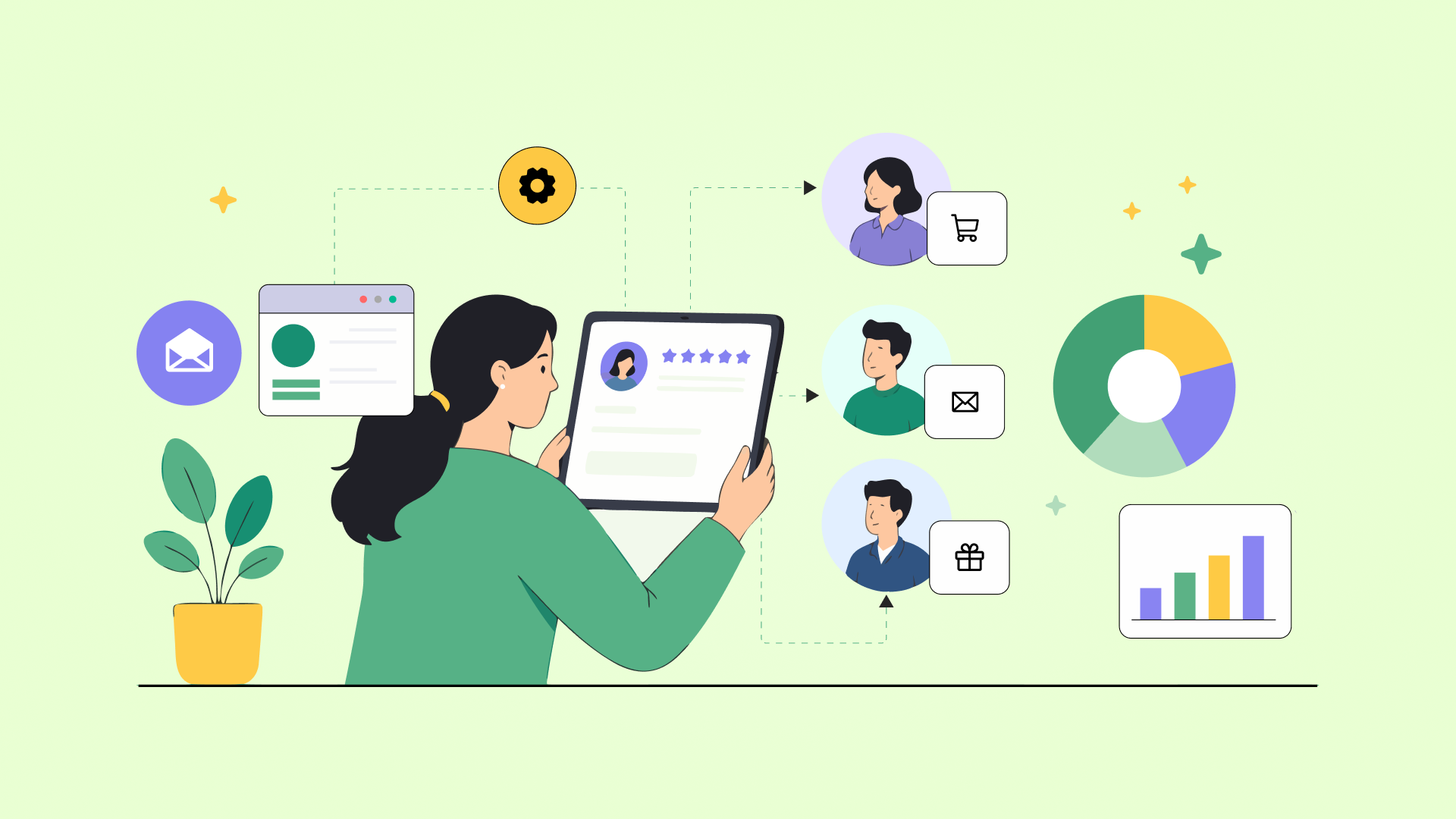
2. Automated emails triggered by CRM stage changes
A connected system allows emails to respond to sales activity automatically.
For example:
Lead moves to demo done → case study email is triggered
Proposal sent → customer success story email follows
Deal won → onboarding sequence begins automatically
No manual reminders. No missed follow-ups.
3. Email engagement becomes a lead-scoring signal
Not all leads deserve equal attention.
A prospect who opened five emails this week, clicked on your pricing guide, and downloaded a case study is clearly warmer than someone who ignored every campaign.
A CRM should reflect that difference.
Email engagement becomes part of lead scoring, helping sales teams prioritize high-intent prospects instead of treating every lead the same.
Email marketing metrics to track
Click-to-open rate (CTOR): Measures the percentage of people who clicked a link after opening the email. It helps determine whether the content inside the email was engaging enough to drive action.
Open rate: Measures the percentage of recipients who opened the email. It is commonly used to evaluate the effectiveness of your subject line, sender name, and send timing.
Click-through rate (CTR): Measures the percentage of recipients who clicked on a link within the email. A higher CTR indicates that the content and call-to-action resonated with the audience.
Conversion rate: Measures the percentage of recipients who completed a desired action after interacting with the email, such as making a purchase, booking a demo, or downloading a resource.
Bounce rate: Measures the percentage of emails that failed to reach recipients' inboxes. High bounce rates often indicate poor list quality, invalid email addresses, or deliverability issues.
Unsubscribe rate: Measures the percentage of recipients who opted out of future communications after receiving an email. Rising unsubscribe rates may suggest issues with content relevance, targeting, or email frequency.
Revenue generated per campaign: Measures the total revenue directly attributed to a specific email campaign. It helps businesses understand the financial impact and return on investment (ROI) of their email marketing efforts.
Teams can continuously test subject lines, content formats, send times, and call-to-actions to improve performance over time.
How AI is changing email marketing in 2026
Send time optimization: AI identifies the optimal send time for individual contacts based on their historical engagement patterns.
Subject line and copy generation: AI tools generate multiple subject line and copy variations at speed, which increases the volume of A/B testing possible and produces better-performing sends faster than manual writing processes.
Predictive segmentation: AI analyzes behavioural data to identify which contacts are most likely to convert, churn, or expand - enabling proactive targeting before those events become visible in traditional metrics.
Dynamic content personalization: AI-powered dynamic content blocks that change based on the recipient's attributes - showing different products, case studies, or CTAs to different recipients within the same email template.
Email automation - the revenue engine running in the background
Email automation is what makes personalization at scale operationally achievable.
Without automation, personalized email sequences require manual effort which is just unsustainable at any meaningful volume. With automation, a single well-built workflow delivers the right content to the right person at the right moment, indefinitely, without ongoing human intervention.
The email types table earlier in this guide shows which of those message types can be set up as automated triggers.
How email marketing works
Build a list
An email list is only as valuable as the quality of the contacts on it. The most important principle in list building is consent: every contact should have actively opted in to receive communications from you. Purchased lists, scraped data, and contacts added without explicit permission consistently produce poor engagement, high spam complaint rates, and deliverability damage that undermines the entire program.
When can you build an effective list? Through genuine value exchange. Content should deliver something worth subscribing for, a lead magnet that addresses a specific problem, a webinar registration that requires an email address, or a product sign-up that includes an email program opt-in.
Audience segmentation
Segmentation and personalization are the two most effective metrics for effective email marketing. However, these are the two that companies end up doing poorly or not at all.
Segmentation is the practice of dividing subscribers into smaller groups based on shared characteristics and delivering content that is relevant to each group. The goal here is simple: increase relevance. The more closely an email aligns with a subscriber's interests, behaviour, or needs, the more likely they are to open, click, and convert.
The most effective segmentation criteria include lifecycle stage (prospect, customer, former customer), engagement level (active versus inactive subscribers), behavioural data (downloads, website visits, email clicks, purchases), and, for B2B organizations, company size, industry, and job role.
Segmentation becomes even more powerful when combined with personalization. Subject lines, messaging, content offers, and CTAs can all be tailored to the audience receiving them.
Deliverability
This is an essential part of email marketing strategy. Companies must ensure their email blasts land in the recipient inbox rather than spam.
Email providers increasingly require businesses to authenticate their domains using standards such as SPF, DKIM, and DMARC before accepting large volumes of email. In 2024, Gmail and Yahoo introduced stricter requirements for bulk senders, making proper authentication a fundamental part of email marketing operations.(Google)
Beyond authentication, inbox placement is largely determined by how recipients interact with your emails. High open rates, clicks, and positive engagement signal that subscribers find the content valuable. Spam complaints, high bounce rates, and consistently low engagement signal the opposite. Over time, these signals shape sender reputation, which directly impacts whether future campaigns reach the inbox.
List quality also plays a significant role. Maintaining clean subscriber lists, removing invalid addresses, and providing a clear unsubscribe option help protect deliverability. When recipients can easily opt out, they are less likely to mark emails as spam, reducing the risk of reputation damage and improving long-term inbox placement.
Start with one email. Then build from there.
The fundamentals have not changed. Build a quality list, segment your audience, write emails worth opening, and measure what works. The tools available in 2026 make each of these steps faster and more effective than ever before. Start with one workflow, learn from the data, and scale what performs.


.jpg)

.jpg)














%201%20(1).svg)
.svg)
.svg)
.svg)
.svg)