


Businesses plan ahead on how much to invest in content creation while distribution is also a major part of the process to discuss.
Allocating the right resources ahead of time, saves over or underinvesting that may hamper target objectives.
What is content distribution?
Brands use platforms like Instagram, LinkedIn, Facebook, Twitter, and TikTok to reach their audience where they already spend time.
They distribute content in different formats such as blog posts, short videos, podcasts, newsletters, case studies, research reports, polls, and quizzes to maximize visibility and engagement.
The 3 types of content distribution channels
Content distribution works best when you understand where your content is being published and how much control you have over it. Most distribution strategies operate across three channel types: owned, third-party, and paid channels.
Each serves a different purpose, and strong content teams usually use all three together instead of relying on just one.
Owned channels
Owned channels are the platforms your company fully controls. You decide what gets published, when it goes live, how it looks, and who sees it first.
These channels include your website, blog, email newsletters, landing pages, CRM communication, and even your brand’s social media profiles.
This is your long-term content strategy that compounds over time. Your blog improves organic search visibility, your email list helps you nurture and retain audiences, and your website acts as the main point for conversion.
Owned channels are predictable and sustainable. You never have to depend on platform algorithms or third-party approval to publish your message.
Third-party channels
Third-party channels help you reach new audiences outside your existing network. They distribute your content through platforms you do not fully control.
This includes backlinks, PR mentions, guest posts, podcast features, review platforms, influencer collaborations, and media coverage.
The advantage here is reach and credibility. When someone else shares or features your content, it creates trust faster than self-promotion. It also gives your content stronger discovery potential and, in some cases, virality.
However, you cannot fully control how the content is presented, how far it spreads, or how the platform prioritizes it.
Paid channels
Paid channels use advertising spend to push your content in front of a targeted audience.
This includes PPC campaigns, paid social ads, sponsored posts, retargeting campaigns, native advertising, and search engine marketing (SEM).
Paid distribution helps when you need speed, precision, and scale. Instead of waiting for organic discovery, you can directly place content in front of decision-makers based on role, company size, industry, behaviour, or buying intent.
It works especially well for lead generation campaigns, webinar promotion, case study distribution, and product-led content with a clear conversion goal.
The strongest content distribution strategies combine all three.
For example, a webinar might first live on your website (owned), get promoted by an industry influencer (third-party), and then run through LinkedIn retargeting ads (paid).
That is where distribution actually helps your business grow and ensure discoverability instead of just publishing content and hoping people find it.
Benefits of content distribution
Wider reach: Distribution pushes your content across multiple channels, helping more people discover it instead of relying only on organic website traffic.
Brand credibility: Consistent distribution of useful insights, research, and case studies positions your business as a trusted voice in the market and also helps with better search rankings.
Increase in qualified traffic: Sharing content through email, social media, search, and partnerships brings targeted visitors to your website, landing pages, or product pages.
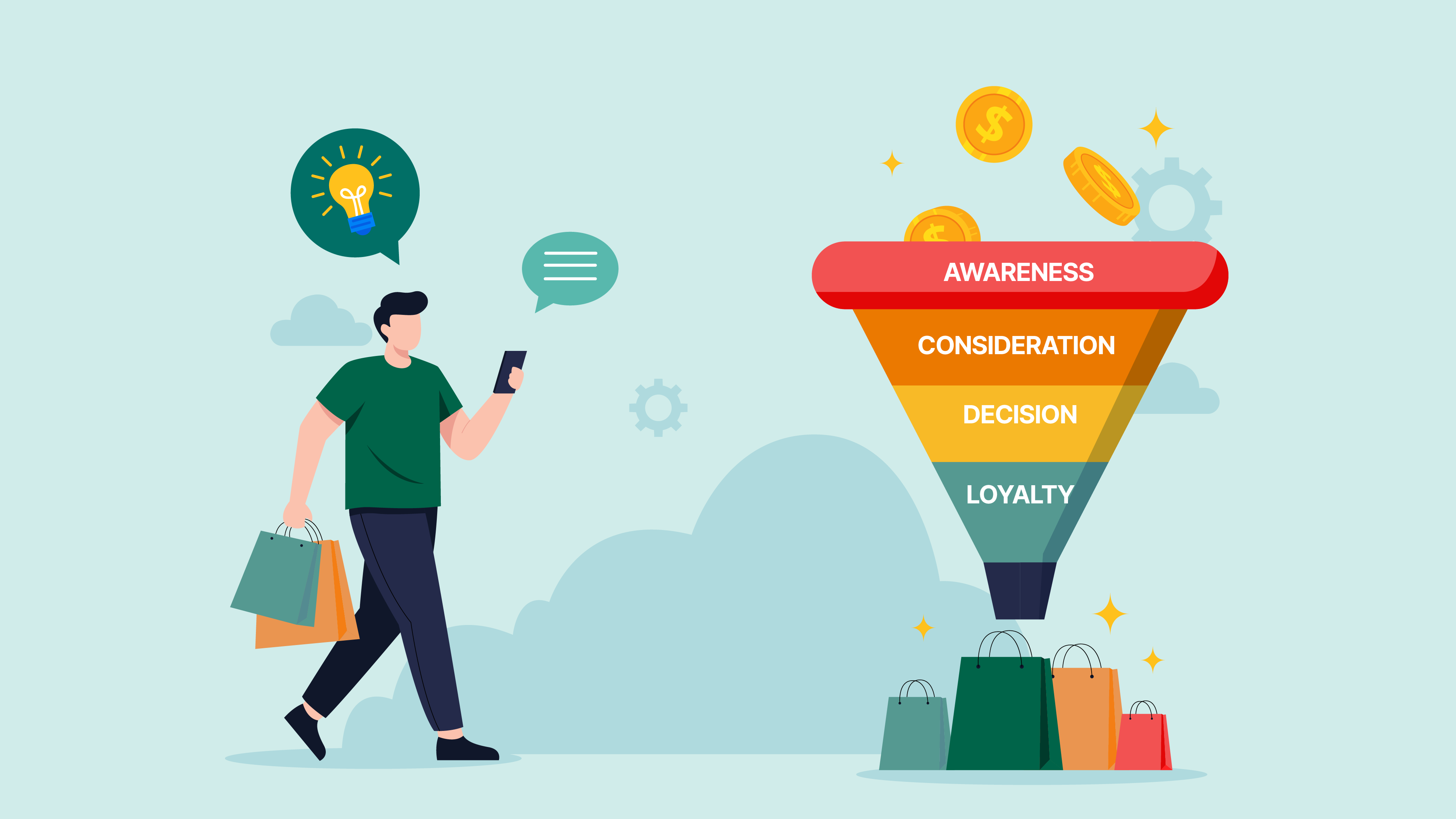
Improved lead generation: Well-distributed content attracts potential buyers at different stages of the funnel, turning attention into inquiries, sign-ups, and sales opportunities.
How to build a content distribution strategy: 5 steps
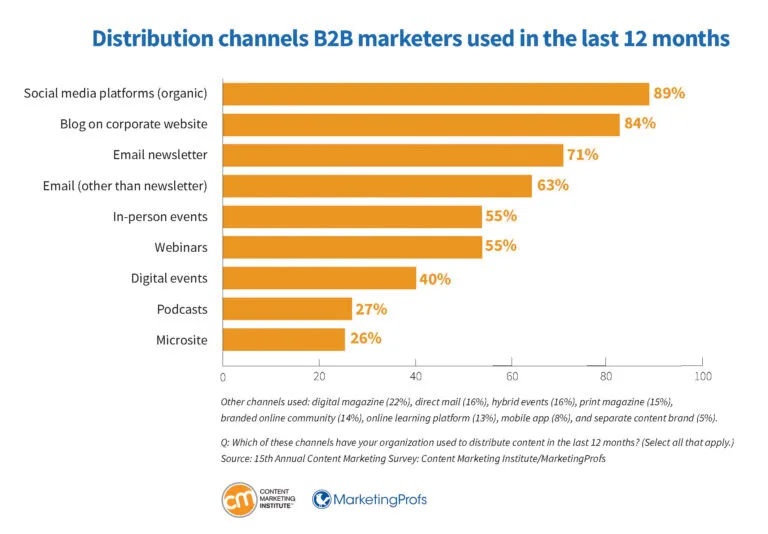
First: Research and identify where most of your audience spends time. Content Marketing Institute’s B2B data shows that emails, newsletters, organic social blogs, webinars, and in-person events are all heavily used distribution channels. This is already a clue that viewers are scattered across channels and your content should too.
Second: Map each content asset to a distribution purpose. Share thought leadership content across your blog, LinkedIn, and newsletter. Use case studies to support sales teams, remarketing campaigns, and follow-up emails. Repurpose webinars into YouTube videos, blog summaries, and quote-based social posts.
Third: Build a repeatable workflow by setting a clear publishing cadence and documenting how content moves from creation to distribution. Use editorial calendars, promotion checklists, and channel-specific copies. Regular performance reviews help you improve what works and remove what doesn’t.
Content distribution by buyer stage
How content repurposing helps to increase reach
The best way to reach a wider audience is to repurpose the same content and distribute it across multiple channels.
One content material can be broken down into:
- a LinkedIn post series,
- a newsletter feature,
- a short video script,
- a webinar outline,
- a sales follow-up resource,
- or a social media carousel.
The process is simple. A long-form research report takes several weeks to develop. It brings together data, insights, case studies, and frameworks, each of which can stand alone as valuable content.
Repurposing unlocks that value by adapting it for different channels. You can turn it into a LinkedIn carousel that highlights the top five data points. You can send an email newsletter that focuses on the most surprising insight. You can create a short video where a subject matter expert explains the core takeaway. You can host a webinar that transforms the research into a live conversation. You can also publish a series of social posts that distribute individual statistics over multiple weeks.
Content distribution tools and platforms
Before comparing tools, it helps to separate them into three categories:
Scheduling tools help publish content consistently (Buffer, Hootsuite)
Distribution tools help get content in front of people (CRM, email, WhatsApp, LinkedIn)
Analytics tools help measure what worked (GA4, Semrush, platform analytics)
AI-assisted distribution tools
A growing category is AI-powered distribution.
These tools help with:
- AI-generated social captions
- Automatic post scheduling recommendations
- Email subject line optimisation
- Personalised email content generation
- Multi-channel content repurposing
The biggest advantage of these tools is, it's reducing the time spent adapting one piece of content for multiple channels.
Content distribution automation
As content volume grows, automation becomes essential. Modern workflows can automatically publish content, trigger email sequences, notify sales teams, and distribute assets across channels without requiring manual intervention for every step.
How to measure content distribution results
Track reach, engagement, clicks, website redirects, time-on-page, re-share, conversion rates.
Tracking these metrics consistently gives clear visibility into how well your content is performing, what channels bring in most traffic, and also resources that are under-performing. A marketing dashboard simplifies this process by helping teams filter and monitor the most important numbers based on their goals.
Teams can utilize this information to improvise or completely revise their content strategy based on what seems to be working and not.
Build your content distribution workflow today
Content distribution is the part of content marketing that decides whether your investment brings any returns at all.




.jpg)

.jpg)














%201%20(1).svg)
.svg)
.svg)
.svg)
.svg)