


Intent-based marketing identifies prospects who are actively researching a purchase - not just people who fit a demographic profile. Instead of broadcasting to everyone who looks like your ideal customer, you reach them at the exact moment they are evaluating solutions like yours.
Traditional B2B targeting asks: "Who is our ideal customer?" Intent based marketing adds a second question that changes everything: "Which of those ideal customers is actively looking to buy right now?"
In this guide, you will learn what intent data is, how to read the signals, which tools work for Indian B2B sales teams, and how to build a strategy that converts faster than any cold outreach campaign.
What is intent based marketing?
For example, if a user is actively searching for CRM pricing for small businesses, it indicates high intent and conversion potential. They are immediately connected with a sales agent following their activity to move forward with the conversation.
Why is intent based marketing important?
Modern B2B buyers do most of the research themselves before reaching out to the seller and often have a shortlist formed. Broad and generic marketing in such cases are futile.
Personal relevance is what cuts through. McKinsey has found that personalization often drives a 10-15% revenue lift, with some companies seeing as much as 25% customer satisfaction depending on execution.
Saves cost: Marketing focuses only on high-intent leads, reducing wasted spend on broad targeting. According to a research by Foundry, intent based ads saw 2.5x better performance in comparison to standard campaigns.
Higher conversion rates: Leads enter the funnel interested, making nurturing easier and improving conversion rates.
Marketing & sales alignment: When both teams see the same signals, scores, and timelines, coordination and follow through is good.
Intent based marketing vs Traditional marketing
At a fundamental level, traditional marketing optimizes for reach, while intent-based marketing optimizes for timing.
Important nuance: this is not either/or
Traditional marketing isn’t useless - it creates the demand that intent data later captures.
Brand awareness campaigns, content marketing, and top-of-funnel efforts are what generate future intent signals. Without them, there’s nothing to capture or act on.
Intent based marketing examples: Search, social, and first-party signals
Search intent
Google search → targeted landing page
A user searches “best real estate CRM in India” and lands on a tailored page comparing options. High-intent keywords help capture demand at the exact moment of need.
Competitor search → alternative ads
A user searches a competitor’s name and sees ads offering a better or cheaper alternative. This intercepts buyers already in the decision stage.
Social media intent
Video engagement → retargeting
Users who watch most of a product video are retargeted with demo or trial offers. Engagement signals interest without explicit search.
Ad interaction → deeper funnel content
Users who click or engage with ads are shown case studies or testimonials next. This moves them from curiosity to consideration.
First-party signals
Pricing page visit → instant sales connect
Users visiting pricing are quickly nudged with demos or contacted by sales. On-site behavior signals strong buying intent.
Repeat visits → stronger CTAs
Returning users are shown offers like free trials or discounts. Multiple visits indicate rising purchase intent.
Third-party signals
Marketplace activity → targeted outreach
Users browsing platforms like 99acres are retargeted with relevant property or service ads. External behavior indicates active demand.
Intent data platforms → outbound campaigns
Companies showing buying signals on third-party tools are targeted with personalized outreach. This helps identify in-market prospects early.
Intent based marketing in India: What makes the Indian B2B market different
Intent signals in Indian B2B sometimes look like a WhatsApp message on a Saturday morning, a sudden spike in your IndiaMart listing views from the same city, or a founder's colleague who “just wants to understand the product better” showing up unannounced on your demo call.
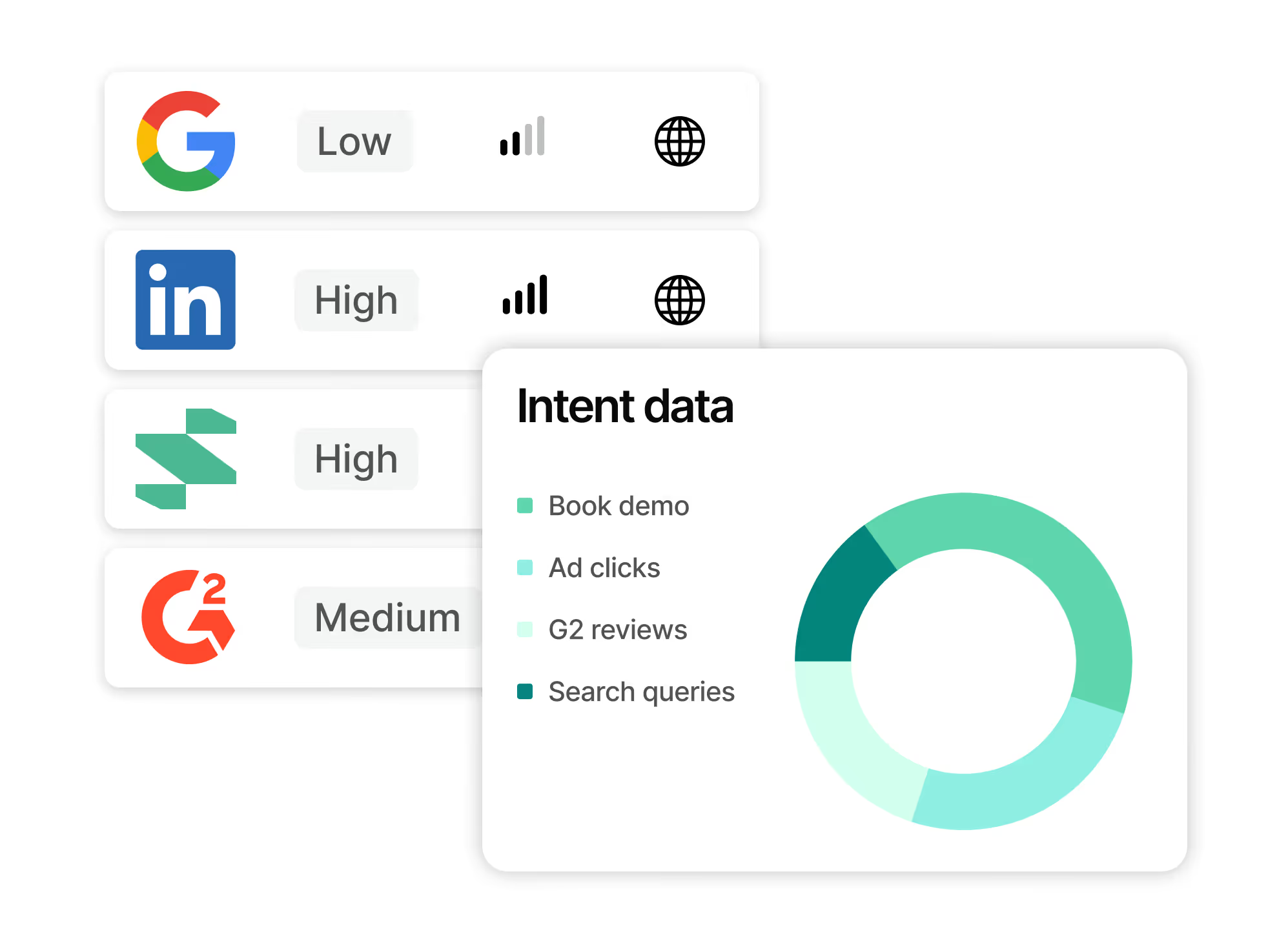
The difference starts with how intent shows up. In US B2B, tools track signals like G2 visits or website behaviour. In India, intent is more fragmented and often more human. A WhatsApp re-engagement after silence, a buyer revisiting your supplier profile, or a spike in searches during festival periods are all strong buying indicators, only if you know how to read them.
India-specific third-party intent signals
Platforms like IndiaMART and TradeIndia function as India’s version of third-party intent platforms.
When a buyer revisits your listing after 7-14 days, they’re usually shortlisting. Especially if those visits are coming from the same city or business cluster, it’s a strong signal that internal discussions are happening. Sales teams that track and act on these revisits close faster than those waiting for inbound enquiries.
WhatsApp as a first-party intent channel
In India, intent doesn’t just sit in dashboards - it shows up in conversations.
On WhatsApp Business, signals like:
- A lead re-initiating a conversation after going silent
- Faster response times to your messages
- Read receipts without drop-off
- Questions like “best price?” or “final quotation?”
…are all indicators of movement toward a decision.
The key is capturing this inside your CRM. If these interactions aren’t logged, your highest-intent signals remain invisible.
The grey-hair hierarchy problem
One of the biggest gaps in standard intent scoring models is who is showing intent.
In Indian MSMEs, the person researching is often not the final decision-maker. A procurement executive visiting your pricing page is a useful signal - but the same visit coming from the founder’s email domain or device carries significantly higher weight.
Intent scoring in India needs to factor in hierarchy, not just behaviour. Otherwise, teams end up prioritizing the wrong leads.
Festival timing as an intent trigger
India has built-in buying cycles that don’t exist in most global markets.
The period between Dussehra and Diwali is one of the highest-intent windows for capital expenditure decisions. During these 4-6 weeks, search activity, platform visits, and inbound enquiries all spike.
Smart teams monitor intent signal volumes and proactively increase outreach when these spikes begin.
Best intent based marketing tools in 2026
How to build an intent based marketing strategy: 5 Steps
Step 1: Build your Ideal Customer Profile (ICP)
Before you purchase any tool, make a list of prospects who are most likely to benefit from your product/solution. Define what kind of intent is worth pursuing.
For example, “CRM solutions” may seem too broad, however, “CRM pricing for enterprise business” hints at higher conversion potential.
Step 2: Set up first-party and third-party intent data tracking
Before relying on third-party data, ensure your first-party tracking is solid.
Set up tools like Google Analytics, CRM systems that capture website activity, and automation to track email engagement. First-party data is your most accurate signal source and your cheapest.
Then layer in third-party data to enrich this such as blog distribution, industry platforms, and social ads to expand reach and capture external intent.
Step 3: Score intent signals and segment your leads
Not every signal has equal weight. Assign points to buyer activities.
For example, “read a blog post” should not score more points than a “visited price page" signal.
Step 4: Personalize content based on intent stage
Based on intent data/search query, craft personalized content around those specific topics. A report by Foundry shows that 91% of B2B marketers use intent data to identify content formats to be disseminated.
Step 5: Measure results and recalibrate every quarter
Review and recalibrate the model quarterly as you accumulate data on what signals actually predict conversion.
Track sales cycle length and average deal size for intent-sourced opportunities. Track win rates when outreach happens within 24 to 48 hours of a high-intent signal versus later. These measurements show where the model is working and where it needs adjustment.
How to combine intent data with account-based marketing (ABM)
Account based marketing tells sales teams which companies to chase and intent data indicates which companies are actively buying right now.
Step 1: Define your ABM target account list
Start with a clear list of 100-200 companies that fit your ICP - industry, size, geography, and deal potential. This is your ABM foundation.
Step 2: Layer intent monitoring
Once your list is defined, track which of these accounts are showing active research signals right now.
This can come from:
- CRM activity (repeat visits, form fills, demo requests)
- Website analytics (pricing page visits, product pages, time spent)
- Third-party sources like G2 intent data
The shift is simple but powerful: instead of asking “who should we reach out to?”, you’re asking “who is already looking?”
Step 3: Tier your outreach
Not all accounts deserve the same level of effort. Segment them based on intent:
Tier 1 - Intent-active ABM accounts
These are your highest priority. Call within 24 hours. Follow up with a personalized WhatsApp message referencing their activity.
Tier 2 - ABM accounts with no current intent
Don’t force outreach. Keep them warm with monthly content - case studies, insights, updates. You’re staying visible without being intrusive.
Tier 3 - Non-ABM accounts showing strong intent
These are unexpected opportunities. Add them to your ABM list and start warm outreach. Intent beats pre-selection.
India-specific reality: Track intent at the account level
In Indian MSMEs, buying decisions are rarely individual.
A typical buying group might include a procurement manager, a business owner, and a CA or finance lead. Which means intent signals shouldn’t be tracked at just the contact level.
If anyone from a target company, especially from the company domain visits your pricing page or engages with your content, it is best to be treated as an account-level signal.
In cases where the procurement manager is researching, chances are the conversation has started internally.
Role of AI in intent based marketing
Prioritizes high-intent leads
Instead of treating all leads equally, AI scores and ranks them based on likelihood to convert, so sales teams focus on the right prospects first.
Personalizes messaging in real time
AI tailors ads, emails, and website experiences based on user behavior - showing the right message at the right stage of the funnel.
Triggers timely actions
When a user performs a high-intent action (like visiting pricing), AI can automatically trigger follow-ups, alerts, or outreach instantly.
Spots intent spikes (timing signals)
AI tracks when a company’s activity on a topic suddenly increases (e.g., 3x more research in a week).
→ This “surge” often signals active buying cycles, not passive interest.
Predicts next best action, not just next best lead
Instead of just saying “this lead is hot,” AI suggests:
- Send demo vs case study
- Call now vs wait
- Offer discount vs product walkthrough
→ Moves from insight → execution.
Intent based marketing limitations
Data quality: Intent data is only as good as its quality. A lead who visited your pricing page on Monday has likely moved on or made a decision by Friday. A full-enrich study shows that most third-party intent platforms update signals on a 24-48 hour lag. First-party signals - on your own website, CRM, or WhatsApp Business are always fresher than third-party data. Prioritize them first, then enrich them with third-party sources.
High cost of implementation: Intent-based marketing involves a significant investment in upgraded tools to accurately capture information and track user activity. .
Context: The buyer who is searching for the solution could be an employee rather than a decision maker.
Over personalization: Relevance matters, but so does restraint. If every message feels overly tracked, the experience can start to feel intrusive rather than helpful.
Build your intent based marketing strategy today
Intent based marketing is crucial in B2B. Teams that have implemented pick up on early signals, personalize communication & outreach and convert efficiently. The tools are widely available. The data is increasingly accessible. The competitive advantage belongs to the teams that move from awareness to execution.









.jpg)

.jpg)


























%201%20(1).svg)
.svg)
.svg)
.svg)
.svg)