


The single greatest hurdle for nearly every business is the unpredictable customer journey. They explore, compare, ask questions, hesitate and sometimes disappear. CRM exists to bring structure to this unpredictable journey. Think of it as a system that maps every touchpoint, guides every interaction, and helps teams work in sync.
This blog explores the core building blocks and processes that make CRM the backbone of modern customer relationships.
What is a CRM process?
A CRM process is a structured set of steps businesses use to manage interactions with leads and customers throughout the customer lifecycle. It defines how teams capture and qualify leads, nurture prospects, convert opportunities, onboard customers, provide support, and build long-term relationships.
What are the components of CRM?
Contact and lead management
Stores and organises customer information, interactions, and lead details in one place, helping teams track prospects and personalize communication.
Sales management
Manages deals, pipelines, tasks, and forecasts. It helps sales teams prioritize opportunities and move leads efficiently through the sales cycle.
Marketing automation
Automates email campaigns, segmentation, lead scoring, and marketing workflows to improve engagement and reduce manual work.
Workflow and process automation
Eliminates repetitive tasks such as data entry, follow-up reminders, and lead routing, ensuring consistency and saving time.
Customer service and support
Includes ticketing, chat, and help desk tools to resolve issues quickly. It centralizes customer history for more personalized and efficient support.
Reporting and analytics
Provides dashboards and insights into sales performance, customer behavior, marketing ROI, and team activity for data-driven decision-making.
Mobile CRM
Gives teams access to customer data tasks, and updates on the go which is especially useful for field sales and remote teams.
Security and data management
Ensures customer data is safe through permissions, access controls, encryption, and compliance with privacy regulations.
What are the benefits of CRM?
- Centralised customer information
- Improved lead management and higher conversions
- Better team collaboration
- Enhanced customer service
- Automation of routine tasks
- Data driven decisions
- Increased customer retention
- Better forecasting and planning
- Improved marketing ROI
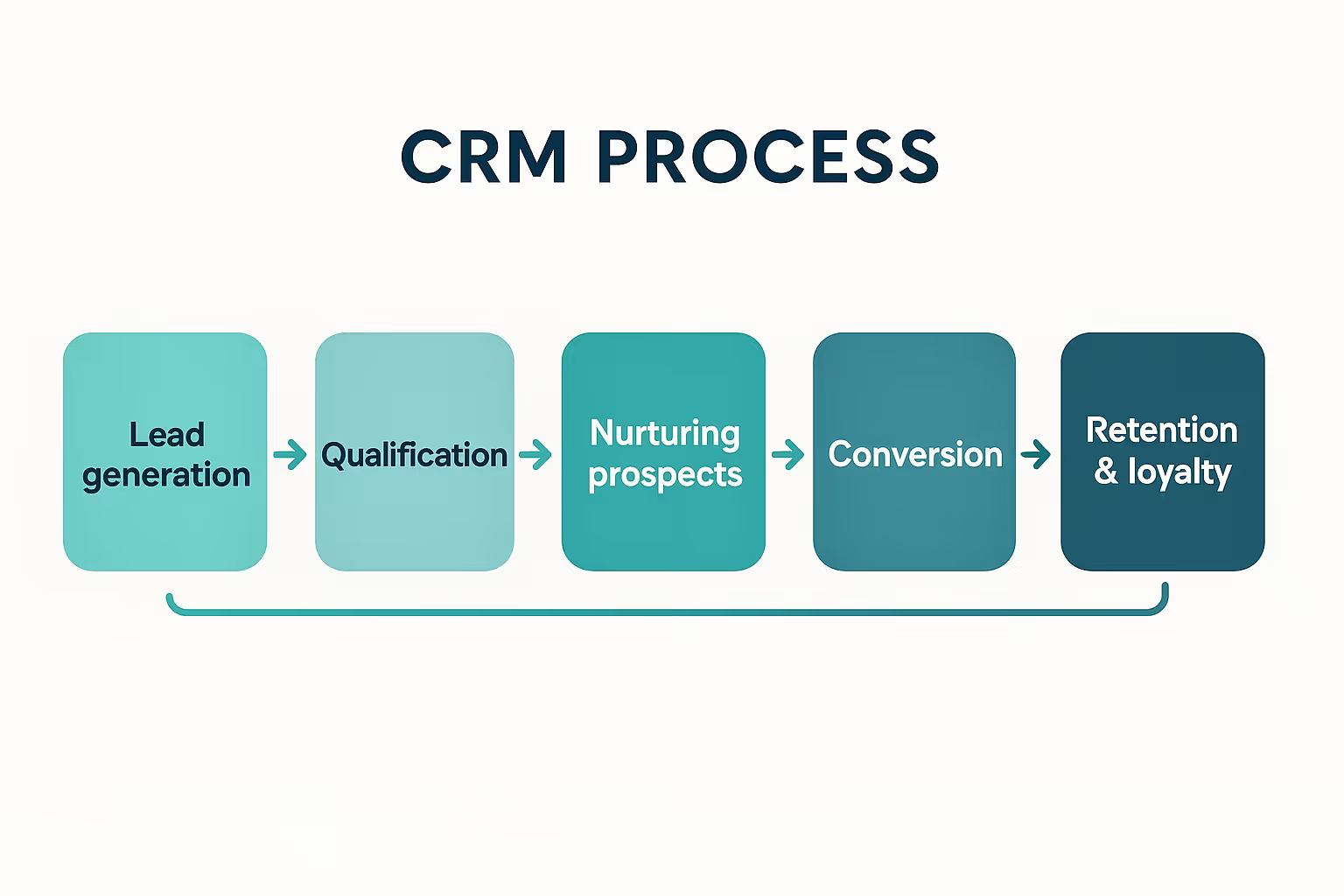
What are the 6 stages of the CRM process?
1. Lead generation
The CRM process begins by attracting and capturing potential customers through channels such as websites, forms, advertising, social media, referrals, events, and other marketing activities. A CRM can centralize these leads and record information such as contact details, lead source, interactions, and initial engagement.
2. Lead qualification
Not every lead is ready or suitable for a sales conversation. During qualification, teams evaluate prospects based on factors such as their needs, company or customer profile, level of interest, budget, and buying intent. CRM data can help sales teams prioritize qualified leads and determine which prospects require immediate attention.
3. Lead nurturing
Some prospects need additional information or follow-up before they are ready to buy. Lead nurturing involves maintaining communication through personalized emails, calls, content, demonstrations, and other relevant interactions. CRM automation can help teams schedule follow-ups and track engagement throughout this stage.
4. Sales conversion
When a qualified prospect is ready to move forward, the CRM helps sales teams manage the opportunity through the sales pipeline. Teams can track calls, meetings, proposals, negotiations, deal values, and stage changes until the opportunity is won or lost.
5. Customer onboarding
After a deal is closed, the CRM process continues with customer onboarding. Teams can use the CRM to coordinate onboarding tasks, track communication, record customer requirements, and ensure that customers receive the information and support they need to get started.
6. Customer retention and loyalty
The final stage focuses on maintaining the relationship after the sale. Businesses can use CRM data to manage follow-ups, renewals, customer feedback, support interactions, cross-selling, upselling, and loyalty activities. Retention activities can also help businesses identify customers who may be at risk of leaving.
Challenges in CRM implementation
Conclusion
A well designed CRM brings clarity to every customer interaction and turns scattered touchpoints into a smooth, connected journey. With the right processes in place, teams collaborate better, customers feel valued, and growth becomes consistent.
If you’re ready to upgrade the way you manage relationships, try Superleap CRM and see the difference yourself!



.avif)
%201%20(1).svg)
.svg)
.svg)
.svg)
.svg)