


Sales velocity answers the simple question of how quickly is our pipeline turning into revenue? Rather than looking at top-line bookings alone, it measures the speed of revenue creation.
In this guide you will learn about sales velocity, its four variables, how to improve your numbers and its impact on business revenue.
What is sales velocity?
How to calculate sales velocity?
Multiply the number of opportunities, average deal size, and win rate, then divide by the length of the sales cycle.
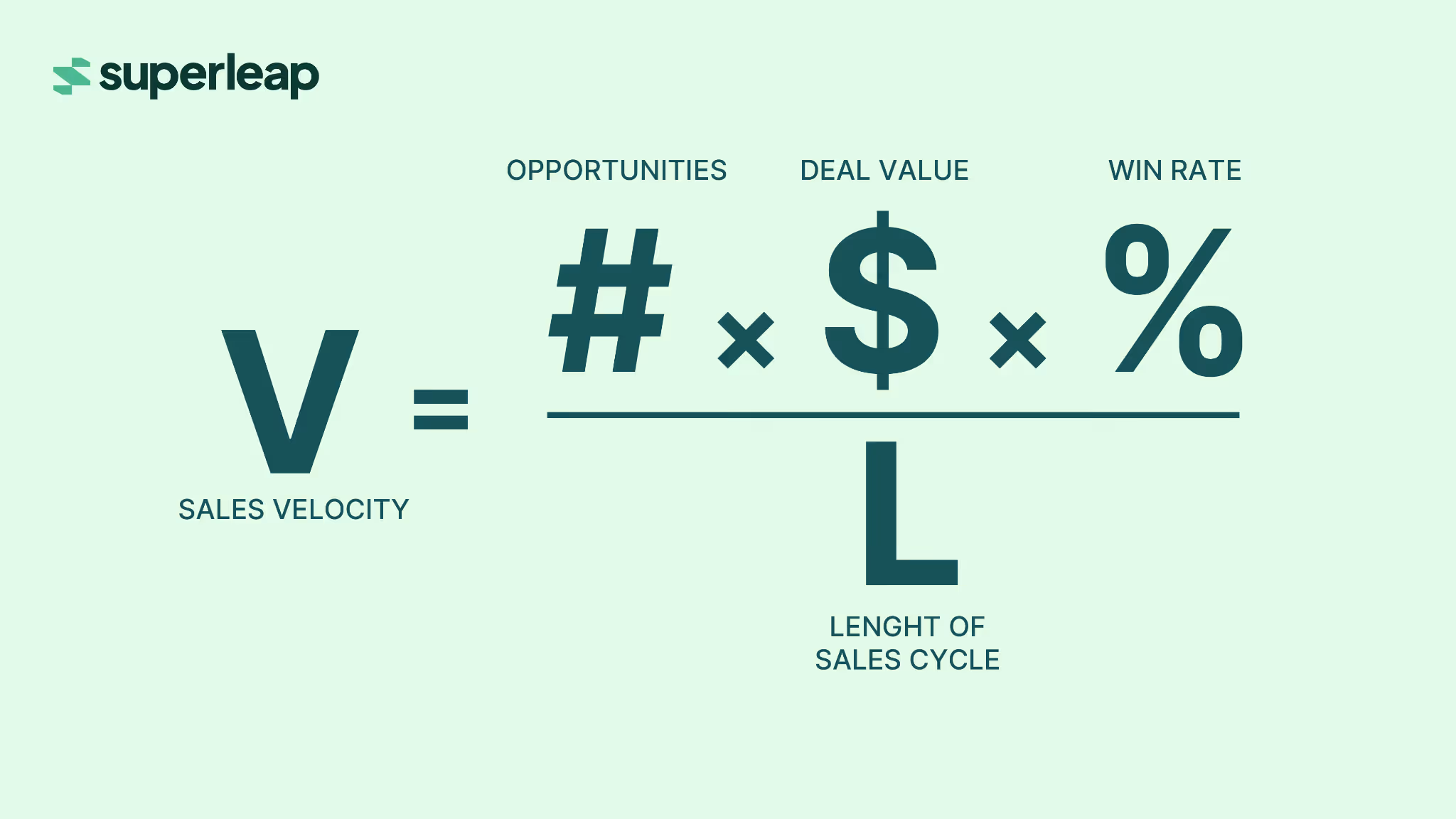
The four variables of sales velocity:
Opportunities: Number of qualified leads in your pipeline
Average deal value: Average contract value of each individual transaction (closed-won)
Calculation: Total revenue ÷ Number of closed-won deals
% of win rate: Proportion of the opportunities who convert; a closed-win. How do we calculate this? Total sales won ÷ total number of opportunities
Length of sales cycle: Time taken to close a deal (first meaningful touch → closed-won)
Practical example of sales velocity formula
Imagine a mid-market B2B team with these metrics (30-day window for simplicity):
Number of qualified opportunities being worked: 40
Average deal value (ACV): $12,000
Win rate: 15% (0.15)
Average sales cycle: 75 days
Apply the formula:
- Multiply opportunities × deal value × win rate:
- 40 × $12,000 × 0.15 = $72,000 (this is expected revenue from the set of opportunities)
- 40 × $12,000 × 0.15 = $72,000 (this is expected revenue from the set of opportunities)
- Divide by sales cycle (days):
- $72,000 ÷ 75 = $960 per day
So this pipeline is generating roughly $960/day for the team. Over 30 days that’s about $28,800.
How to improve sales velocity?
How to increase the number of opportunities?
Sales velocity improves when you tighten your ICP, run targeted account based marketing, scale your SDR/BDR outreach or channel partnership, and improve lead quality (not just quantity).
You can generate high-quality leads via:
- Google Ads
- Referrals & networking
- Effective content marketing (gated content)
Quick wins: Re-engage cold trial users with a 2-touch email + call sequence; set SLA for sales to contact MQLs within X minutes.
How to increase average deal value?
Package & bundle logically (add premium features that cost little to deliver), and offer value-added services (onboarding, premium support) as paid add-ons.
How to improve win rate?
Tighten your lead qualification process, use customer proof like case studies with metrics, coach reps on discovery and demo skills, use call recordings + AI analysis to review and improvise performance.
How to shorten the sales cycle?
Reduce friction by simplifying contracts with pre-approved templates and clear pricing tiers. Offer pre-built integrations, clear implementation timelines, and ready-to-share security documentation. Automate proposal and contracting (CPQ + eSign) to cut administrative lag.
Mistakes to avoid while measuring sales velocity
Mixing segments: The sales pipeline for an SMB is different from enterprise. Always segment your customers before velocity calculations.
Outdated CRM data: Data hygiene is important to calculate potential velocity. Numbers are only reliable when they’re up-to-date and clean.
Velocity with discounts: Keep in mind the short term boost from discounts to tamper margin and customer lifetime value (CLTV).
How does sales velocity affect a business?
Sales velocity affects everything from cash flow to hiring decisions.
Improved cash flow predictability
When deals move consistently through the pipeline, this allows leadership to plan investments, hiring, and expansion with greater confidence.
Better resource utilization
When sales cycles become shorter and deals close faster, sales reps can handle more projects within the same timeframe, thereby increasing per rep revenue and overall sales productivity.
Higher operational efficiency
Improving velocity forces businesses to fix bottlenecks, be it in pricing approvals, contract processes, or follow-ups - leading to a more streamlined sales engine.
Tools used to accelerate sales velocity
CRM (source of truth): Superleap - track opportunities, ACV, close dates and stage velocity.
Sales analytics & forecasting: Business-intelligence layers that compute velocity and model scenarios.
CPQ & contracts: Quick proposals and eSign to reduce admin lag.
Sales engagement & cadence tools: Speed up outreach (automatic follow-up and sequencing).
Conversation intelligence: Identify winning behaviors and coach reps to improve win rate.
Conclusion
Sales velocity helps you prioritize the areas that will generate best returns - be it more opportunities, higher AVC, better win rates or faster and shortened sales cycles. It enforces discipline like mandatory clean CRM data, clear stage definitions, and a culture where performance is measured, tested, and continuously improved. It focuses on what brings in revenue and keeps the business going.





%201%20(1).svg)
.svg)
.svg)
.svg)
.svg)