


When sales executives are busy closing deals, who comes to the rescue for always keeping the pipeline flourished? Sales support. In this blog, you will learn more about what support teams do, and how they contribute to sales success. Let’s go!
What is a sales support team?
These tasks include admin duties, coordination, reporting, and client communications which do not require a sales person’s direct involvement.
Sales support vs sales operations vs sales enablement vs customer support
Sales support focuses on execution and day-to-day assistance for sales reps.
Sales operations, on the other hand, is more strategic and analytical. It is responsible for defining sales processes, managing sales tools and tech stacks, tracking performance metrics, forecasting revenue, and improving overall sales efficiency at a systemic level.
Sales enablement trains and equips reps with content and playbooks, while customer support serves existing customers after a purchase. A simple boundary rule keeps the lines clear: sales support compiles and sends the reports, and sales operations defines the metrics and owns the forecast.
In smaller companies, one role often covers both selling support and customer support, which is why you will also see the job title “sales and support”.
What do sales support teams actually do?
Lead & CRM data management
Assigning, tracking, keeping all customer contact, meeting records, and updating deal statuses in the CRM. Without this help, sales reps would spend a heavy amount of time just clicking boxes.
Building proposals & quotations
Craft sales presentations, quotes, proposals accurately and in a timely manner. Sales support ensures these documents are error-free, well-formatted and sent out on time- especially in B2B deals.
Order processing & delivery follow-up
Ensuring all orders are entered correctly, invoiced, and dispatched on time by co-ordinating with the logistics team.
Coordinating with sales reps for scheduling
Setting up sales calls, demos, and meetings with clients.
Market research
Gathering competitor data, pricing trends, and market insights to identify business opportunities, improve forecast, and plan smarter.
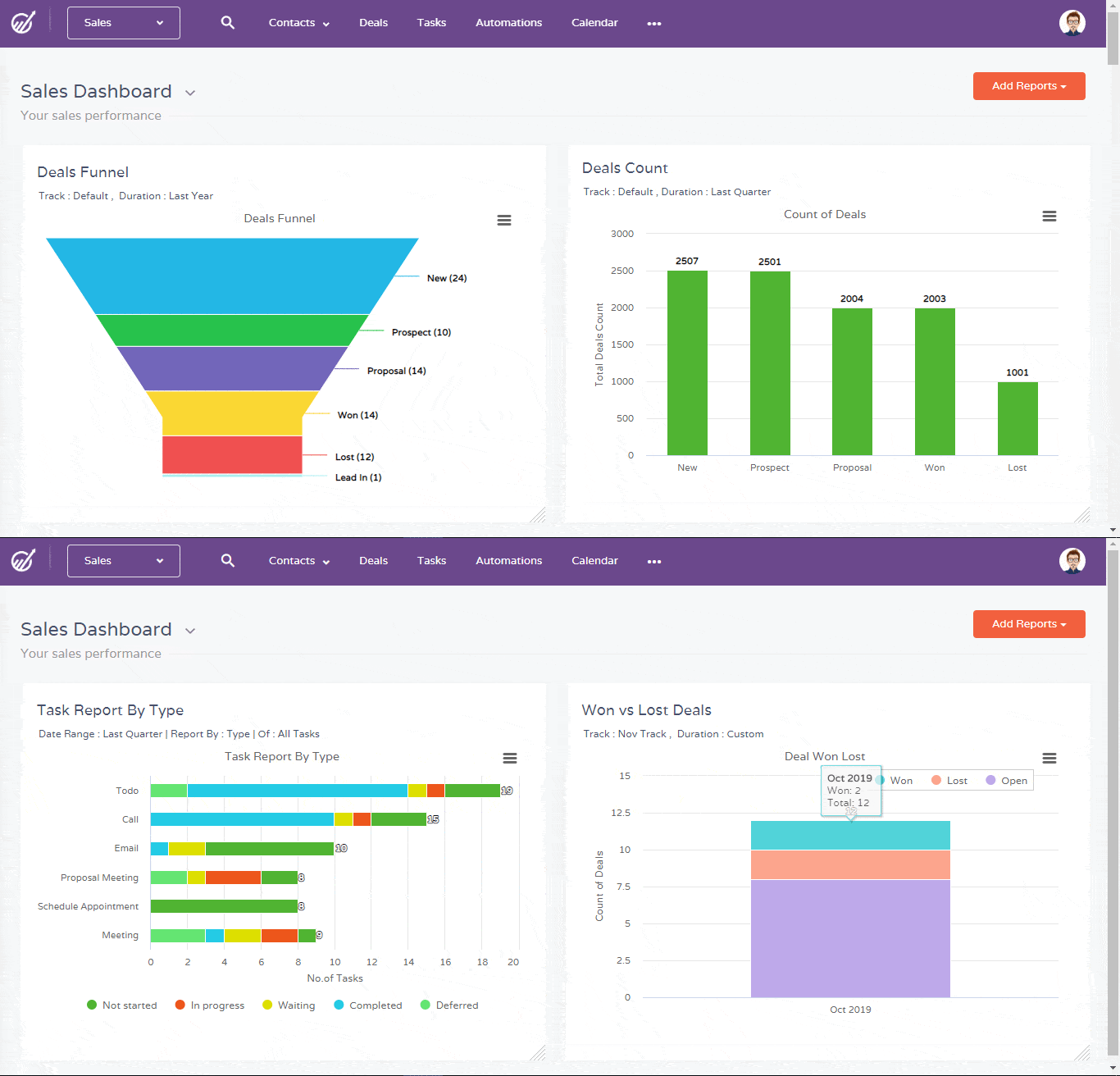
Reporting & dashboards
Compiling weekly pipeline and activity reports for managers and sending them out on schedule.
Handling customer queries
Answering order-status questions and document requests, and passing anything complex to the right rep.
Contract & documentation admin
Keeping agreements, price lists and e-signature follow-ups organized, so nothing waits on a missing document.
Day in the life of sales support teams
How sales support teams contribute post-sales
While sales support teams are often seen as a critical resource during the sales process, their contributions don’t end once a deal is closed. Post-sales support is equally important for driving customer retention and expanding revenue opportunities through renewals, cross-sells, and upsells.
Key post-sales activities:
- Renewals
Sales support teams ensure that customer contracts are renewed on time. They track contract expiration dates, follow up with clients, and provide sales reps with necessary data to negotiate renewals effectively.
Example: A SaaS sales support team tracks subscription end dates and sends automated reminders, ensuring no renewals are missed.
- Cross-sells
By analyzing customer purchase histories, sales support can identify complementary products or services to recommend during account reviews.
Example: A sales support team in an FMCG company suggests bundling additional products based on a client’s buying patterns.
- Upsells
Support teams assist sales by creating customized proposals or quotes for higher-tier products, premium packages, or additional features.
Example: A sales support professional in an IT company prepares a detailed comparison of basic vs. premium packages, helping the sales rep pitch an upgrade.
- Customer onboarding support
Sales support also helps customers with onboarding, ensuring they understand the product, its value and ease them into its usage.
Example: A sales support rep guided a new client through setting up their SaaS account and dashboards, which reduced early confusion.
Onboarding itself usually sits with customer success or account management, so the sales support job is a clean handoff: the signed contract, the key stakeholders and any promises made during the sale.
Why does this matter?
Renewals, cross-sells, and upsells contribute significantly to customer lifetime value (CLV). Post-sales support ensures consistent communication with clients, fostering long-term relationships and increasing repeat business opportunities.
What is the impact of a sales support team on sales success?
Freeing up selling time
Sales reps can spend time building customer relationships, negotiating and closing deals instead of chasing paperwork.
Better customer experience
A sales support team ensures that proposals go out on time, follow-ups happen without delay, and customer queries are addressed promptly and professionally. This creates a smoother, more reliable customer experience, therefore increasing chances of repeat purchase.
Consistency in process
Members of the sales support teams standardize templates, go through compliance policies for price lists, and maintain accurate records. This way, errors are minimized and trust is built, as customers see professional operations at every given touchpoint.
Increase in revenue
While administration is a huge chunk of tasks for the support team, they also play a major role in increasing revenue. When support teams manage leads, streamline internal workflows, and provide reliable sales data, the sales cycle speeds up.
This results in a much faster deal closure, better pipeline visibility which ultimately means a healthier revenue growth.
In a 2016 McKinsey analysis, an electronics firm that adjusted its support ratio and digitized support work saw sales time spent on direct activities jump from 30% to 50%. This resulted in:
- 5-10% higher win rates
- Up to 40% faster deal closure
- Up to 30% reduction in operations costs
- Ongoing 2-3% annual productivity gains
The gains came from restructuring support, not from adding headcount alone.
But to achieve all of this, what are the skills required?
What skills do sales support professionals need?
Soft skills
- Organizational ability: keeps proposals, orders and follow-ups from slipping through the cracks
- Communication: keeps reps, customers and other teams on the same page
- Time management: handles many small deadlines in a day without missing the important ones
- Attention to detail: catches pricing and spelling errors before a quote reaches a buyer
- Problem-solving: finds a way forward when an order, document or approval gets stuck
- Ability to learn sales tools quickly: new tools arrive often, and the team has to adopt them fast
Technical/hard skills
- CRM systems: updating records and building simple reports
- MS Excel and Google Sheets
- Knowledge of sales cycles and products
- Proposal and document design
- Basic data analysis
- Pricing and contract knowledge
What tools do sales support teams need?
CRM features that empower sales support teams
When choosing a CRM for your sales support team, look for features like:
- Automated lead assignment: Ensures leads are distributed fairly and efficiently.
- Activity tracking: Allows support teams to log calls, emails, and notes for sales reps to reference.
- Analytics dashboards: Provides real-time insights into sales performance and pipeline health.
- Workflow automation: Reduces manual tasks like follow-ups and reminders.
For example, Superleap offers lead-scoring features, and also includes email templates and meeting schedulers, making life easier for both sales reps and support teams.

Key ways sales support boosts sales performance
Each benefit below is easier to defend when you track it. Here is how to measure it.
Sales support services: in-house vs outsourced vs software
Companies look for sales support in three forms. An in-house team suits work that needs deep product and account knowledge. An outsourced provider suits high-volume, rule-based work such as order entry or data clean-up. Software suits repeatable steps such as reminders and document generation. Most sales teams end up mixing all three.
Career path in sales support
Sales support is a common way into sales operations. A typical path runs from sales support executive or coordinator, to senior sales support, to sales operations analyst, and then to sales operations manager. The skills that move you up are CRM administration, data analysis and process design.
Conclusion
Sales support roles are critical to modern sales teams. With the right skills and tools, support professionals can drive efficiency and career growth.
If your support team still chases data across spreadsheets and inboxes, Superleap brings leads, activities and deal updates into one CRM. Book a demo to see it in action.