



Scaling a business often comes with tangible challenges:
- Your sales pipeline is limited to existing markets
- Entering new regions requires significant investment
- Your competitors are already using extensive networks to dominate untapped opportunities
For sales executives new to B2B, it’s hard to grow revenue without overstretching resources.
This is where channel sales shine. By partnering with distributors, resellers, or affiliates, you can extend your reach without managing every sale yourself.
In this blog, we’ll explain what channel sales is and the strategies that make it effective.
Let’s get started!
What is Channel Sales?
By leveraging channel sales, businesses can expand their market reach, reduce upfront sales costs, and focus more on core operations like product development and marketing. It’s a win-win: partners earn commissions or incentives for driving sales, and companies gain access to markets they might not reach independently.
For example, a software company might work with value-added resellers (VARs) to offer its product bundled with additional services, providing a tailored solution for the end customer.
Difference Between Channel Sales and Direct Sales
Benefits of Channel Sales
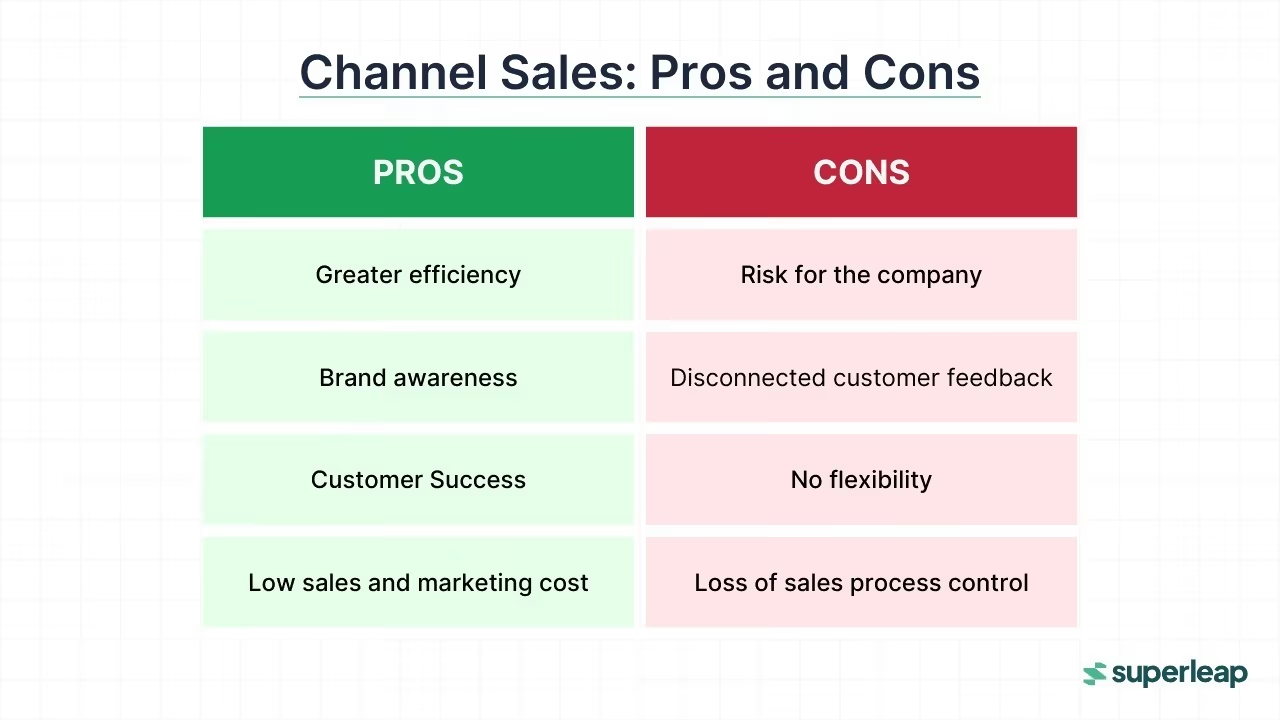
Channel sales bring several advantages to businesses, enabling them to expand their reach, optimize costs, and enhance overall efficiency. Below are the key benefits explained in detail:
1. Expanded market reach
By collaborating with channel partners, businesses can access customer segments and geographical markets that would be challenging to reach independently. These partners often have established relationships, local expertise, and existing networks, which allow your product or service to gain traction faster without the need for significant investment in new markets.
2. Cost-effective scaling
Setting up and maintaining an internal sales team requires considerable resources, from salaries to infrastructure. With channel sales, companies can scale operations by relying on partners who manage the sales process, reducing overhead costs while still increasing market coverage and revenue potential.
3. Faster time-to-market
Channel partners can help businesses launch products more quickly by leveraging their established distribution networks and customer bases. Instead of building a sales infrastructure from scratch, companies can rely on partners to hit the ground running and get products in front of customers faster.
4. Reduced operational burden
Managing an extensive sales operation internally involves significant logistical challenges. Channel sales partners handle many aspects of the sales process, such as lead generation, customer relationship management, and even post-sales support, freeing up internal resources to focus on innovation and strategic priorities.
5. Improved customer relationships
Partners often have strong relationships with their customers, enabling them to act as trusted advisors. This trust makes it easier to introduce your product, boosting the likelihood of conversions and long-term customer retention.
6. Flexibility and risk mitigation
A channel sales model allows businesses to remain agile, adjusting strategies without committing heavily to one market or sales approach. Additionally, sharing the sales responsibility with partners spreads the risk, especially in volatile markets.
Steps to Building a Channel Sales Program for Your Business
Creating a successful channel sales program requires a well-thought-out approach that aligns with your business goals and ensures strong relationships with your partners. Below are detailed steps to build a robust channel sales program.
1. Define your channel sales objectives
Before diving into partnerships, you need clarity on what you aim to achieve with your channel sales program.
- Set specific goals: Do you want to increase market reach, boost revenue, or target a specific customer segment? Define measurable outcomes like a 20% increase in sales or entering three new markets in a year.
- Align with company strategy: Ensure your channel sales objectives align with your broader sales and marketing goals to maintain consistency across all efforts.
2. Identify and profile ideal channel partners
Not all partners are the right fit for your business. Identifying and profiling the ideal partners is crucial for success.
- Evaluate compatibility: Look for partners whose values, goals, and expertise align with your business. For example, a distributor with strong regional knowledge can be a game-changer for local market penetration.
- Assess capabilities: Ensure potential partners have the resources, market presence, and expertise to represent your product effectively.
- Segment partners: Classify partners based on their strengths e.g., technology-focused resellers versus geographically strong distributors.
3. Craft a compelling partner value proposition
Your partners need a solid reason to work with you. A strong value proposition makes your program attractive and motivates them to prioritize your products.
- Highlight benefits: Focus on how partnering with your company helps them grow. This could include competitive commissions, co-marketing opportunities, or access to exclusive tools.
- Show differentiation: Explain what makes your product unique and why it’s a profitable addition to their portfolio.
- Emphasize support: Partners are more likely to succeed when they know they can access resources like training, technical support, and marketing assets.
4. Develop a structured onboarding process
A smooth onboarding process sets the tone for a successful partnership.
- Start with a roadmap: Provide a clear step-by-step guide that partners can follow to get started quickly.
- Offer initial training: Include product training, sales strategy workshops, and technical know-how to help partners understand your offerings thoroughly.
- Equip partners: Share resources like sales playbooks, marketing materials, and demo kits to ensure they’re fully prepared to sell.
5. Establish clear communication channels
Strong communication is the backbone of any successful channel sales program.
- Set regular touchpoints: Schedule monthly check-ins or quarterly business reviews to discuss progress and challenges.
- Use multiple channels: To maintain a consistent connection, rely on email, video calls, partner portals, and in-person meetings.
- Be responsive: Ensure that partners have easy access to support when they need it. Slow responses can lead to lost sales opportunities.
6. Design an effective incentive program
A well-designed incentive program motivates partners to sell your product over competitors.
- Offer competitive commissions: Ensure your commission structure is attractive and aligned with industry standards.
- Include tiered rewards: Create tiers where higher-performing partners earn greater rewards, encouraging sustained effort.
- Incorporate non-monetary rewards: Offer perks like exclusive certifications, co-branded marketing opportunities, or invitations to partner events.
7. Provide ongoing training and development
Sales trends evolve, and your partners must stay updated to remain effective.
- Offer refresher training: Conduct regular sessions to keep partners informed about product updates and new selling strategies.
- Provide certifications: Incentivise learning by offering certifications that partners can use to showcase their expertise.
- Focus on skills: Teach partners negotiation, objection-handling, and cross-selling techniques to improve their effectiveness.
8. Monitor and evaluate program performance
Continuous evaluation ensures your program stays on track and delivers results.
- Define KPIs: Track metrics like partner sales performance, lead conversion rates, and customer satisfaction scores.
- Collect feedback: Regularly gather input from partners to understand challenges and identify areas for improvement.
- Adjust strategies: Use performance data to tweak your program and optimize outcomes.
9. Foster a collaborative partner community
Building community among your partners can drive loyalty and enhance collaboration.
- Host events: Organize partner summits or webinars to share knowledge and build connections.
- Create a knowledge hub: Offer an online portal with resources, FAQs, and success stories for partners to access anytime.
- Encourage peer learning: Facilitate networking opportunities where partners can learn from each other’s successes.
Implement a CRM System for Effective Channel Sales Management
A Customer Relationship Management (CRM) system is vital in streamlining channel sales operations.
It helps businesses manage partner relationships, track sales activities, and optimize collaboration for better results. CRMs designed for channel sales go beyond customer management—they enable seamless coordination with partners.
- Streamline partner interactions: CRMs provide a centralized platform to manage all communications with your channel partners. You can track emails, calls, and meetings to ensure consistent follow-ups and a unified approach.
- Monitor deal progress: Use the CRM to monitor deals your partners manage. With real-time updates, you can stay informed about each deal's status and provide timely support to close sales faster.
- Enable lead distribution: CRMs simplify lead allocation by automatically assigning leads to the right partners based on their expertise, location, or performance. This ensures every opportunity is handled efficiently.
- Track partner performance: Measure key metrics like revenue contribution, conversion rates, and deal timelines. Use these insights to identify high-performing partners and areas for improvement.
- Enhance collaboration: Provide partners access to the CRM through dedicated portals or dashboards. This allows them to view assigned leads, track commissions, and access sales materials in one place.
Kickstart Your Channel Sales Campaign Today
Channel sales is more than just a sales strategy. By leveraging the networks, expertise, and resources of channel partners, you can achieve growth that would be costly and time-intensive to replicate in-house.
When done right, the rewards from channel sales include increased revenue, stronger market presence, and long-term business sustainability.
Whether new to B2B sales or looking to refine your strategy, channel sales offers an opportunity to grow smarter, not harder. The next step? Start building your program today and unlock the potential of partnerships to transform your sales game.





%201%20(1).svg)
.svg)
.svg)
.svg)
.svg)