
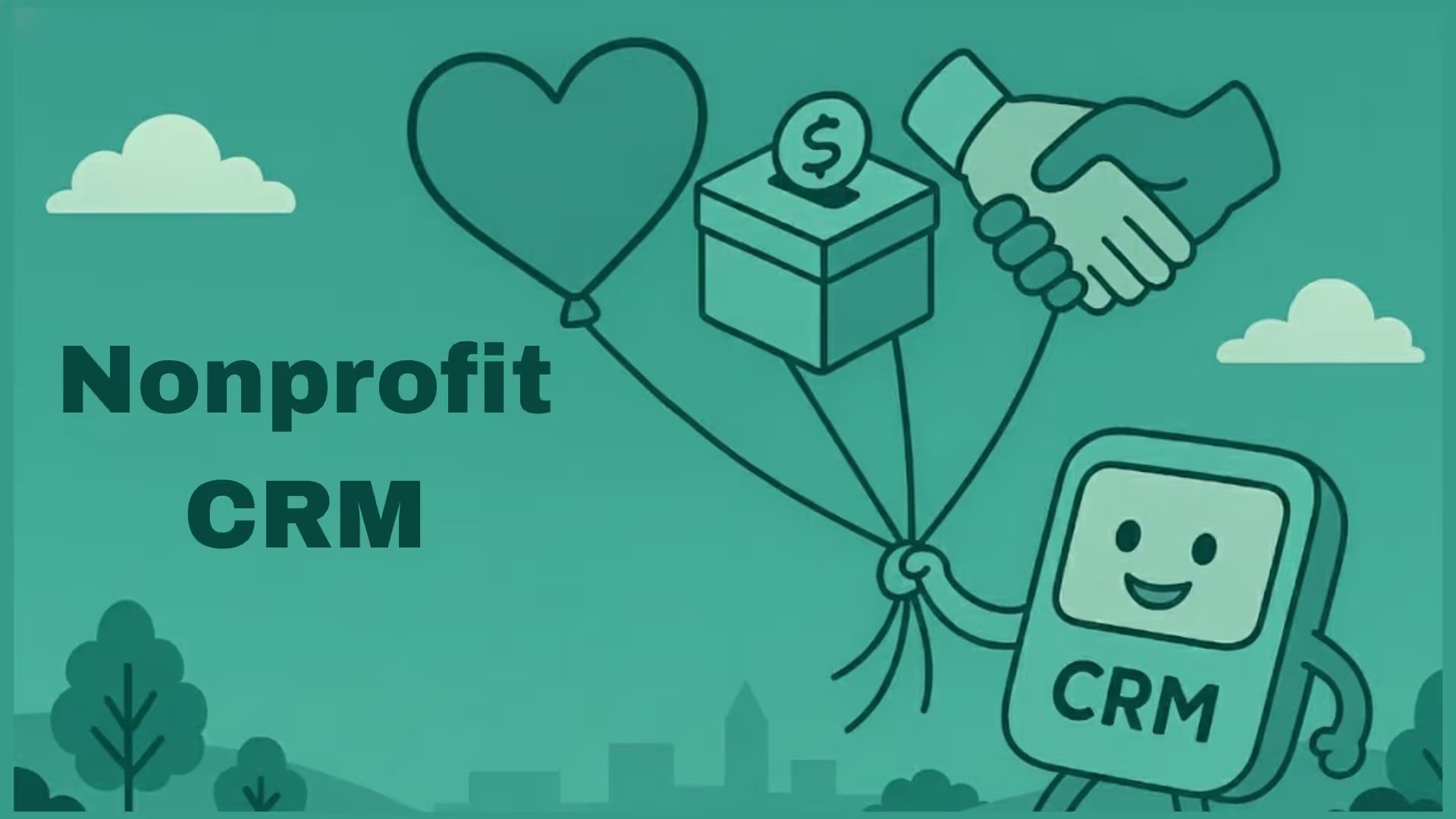


Non profit organizations juggle a variety of relationships with donors, volunteers, partners, and program participants.
A CRM for nonprofits helps centralize these relationships into one system, making it easier to manage fundraising, engagement, reporting, and long-term impact without increasing administrative burden.
According to a report by Market Mind Partners, the market size of the global NGO and charitable fund was evaluated to be $313.29 billion in 2024 and expected to touch $331.66 billion by 2033, at a 5.9% CAGR. With this rate, to maximize your impact and keep the mission running smoothly, implementing a modern AI powered CRM is a non-negotiable.
What is a CRM for nonprofits?
Their focus is on relationship longevity, donor retention, impact reporting, and operational transparency rather than transactional revenue alone.
Why every nonprofit needs a CRM system?
Here is a list of challenges nonprofits face and how a CRM will help resolve it.
Problems nonprofits face without a CRM
- Donor data in silos
- Inefficient volunteer communication
- Grant tracking failures
- Poor donor retention
- Impact reporting delays
- Budget and staffing constraints
How a CRM for nonprofits solves these problems
- CRM becomes single source of truth
- Faster, personalized & automated multichannel communication
- Scalable operations
- Cost-effective, minimized staff dependency
- Reports and dashboards to show funders, board members and your team the impact
- Grant lifecycle tracking
- Lower admin workload per staff member
Superleap AI CRM helps nonprofits automate follow-ups, centralize communication across channels, and generate real-time dashboards that can be shared with funders and board members.
What actually breaks when nonprofits don’t use a CRM?
In practice, nonprofits that rely on spreadsheets, email inboxes, or disconnected tools face operational failures - more so noticeable as they scale.
Common breakdowns seen on the ground:
- Duplicate donor records leading to repeated or missed communications
- Lapsed donors going unnoticed for months
- Grant deadlines missed because ownership is unclear
- Impact data scattered across teams, making reporting slow and error-prone
- Board members questioning numbers because “the source of truth” is unclear
What features to look for in a CRM for nonprofits?
Donor & constituent profiles: Ability to store gift history, contact info, notes, volunteer hours, membership status.
Gift & pledge tracking: One-time gifts, recurring gifts, pledges, soft credits, restricted funds.
Fundraising workflows: Appeals, peer-to-peer campaigns, recurring donors, event registration.
Volunteer/membership tracking: Hours logged, shifts, renewal dates, segmented outreach.
Communications & integrations: Email/SMS/mailing lists, forms, payment gateway, website integration.
Reporting & dashboards: Donor retention rate, average gift size, cost per dollar raised, volunteer engagement.
Affordability & nonprofit pricing: Recognize budget constraints and look for vendor discounts or free tiers.
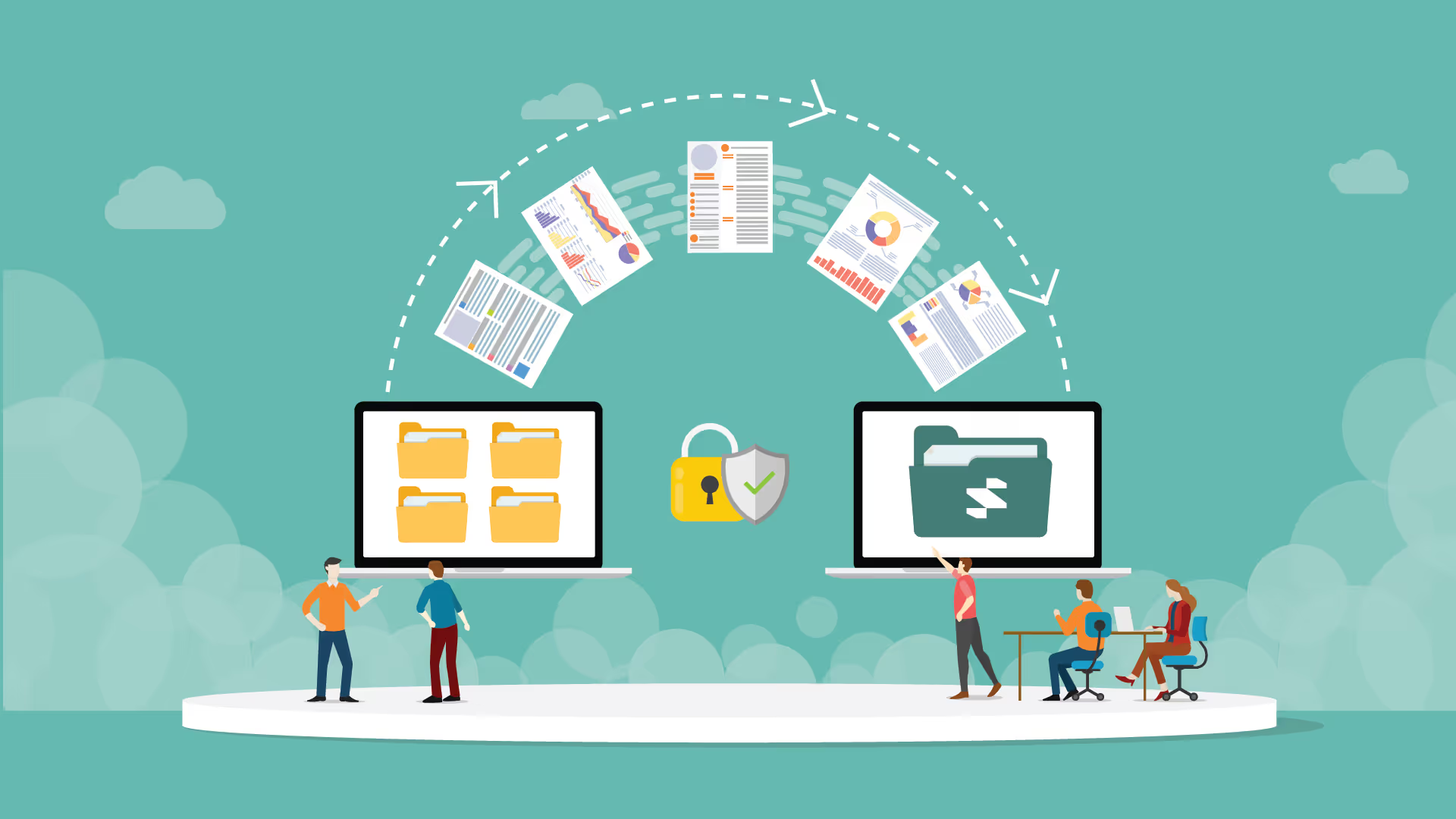
Data quality & security: Deduplication, audit fields, encryption, role-based access.
Superleap, for example, combines donor profiles, communication history, and workflow automation into a single view, allowing NGOs to minimize tool sprawl while boosting data quality.
CRM for NGOs vs charities: Is there a difference?
Relationship focus: Charity CRMs prioritize individual donor stewardship; NGO CRMs focus on complex stakeholder, partner, and institutional funder management.
Funding mechanics: Charities require high-volume tools for recurring donations; NGOs need advanced grant lifecycle tracking for restricted, multi-year institutional funds.
Compliance & scale: Charities manage local tax-deductible receipting; NGOs handle multi-currency accounting and international regulatory compliance (e.g., IATI standards).
Database structure: Charity systems are typically "constituent-centric" (donor-focused); NGO systems are often "program-centric" (focused on field projects and humanitarian outcomes).
How to choose the best CRM for nonprofits?
Before selecting any CRM for non-profits, ask:
- Are you donor-driven, grant-driven, or program-driven?
- Do you need fundraising-first or operations-first CRM architecture?
- Does it support donations + volunteers + grants, not just contacts?
- Can non-technical teams use it easily?
- Does it integrate with accounting and payment systems?
- Can it scale with donor and program growth?
- Does it support reporting for funders and boards?
- Does it improve transparency and trust?
If you’re exploring a modern, AI-powered CRM built to support growing nonprofit operations, Superleap is one option worth evaluating.


.avif)
%201%20(1).svg)
.svg)
.svg)
.svg)
.svg)