
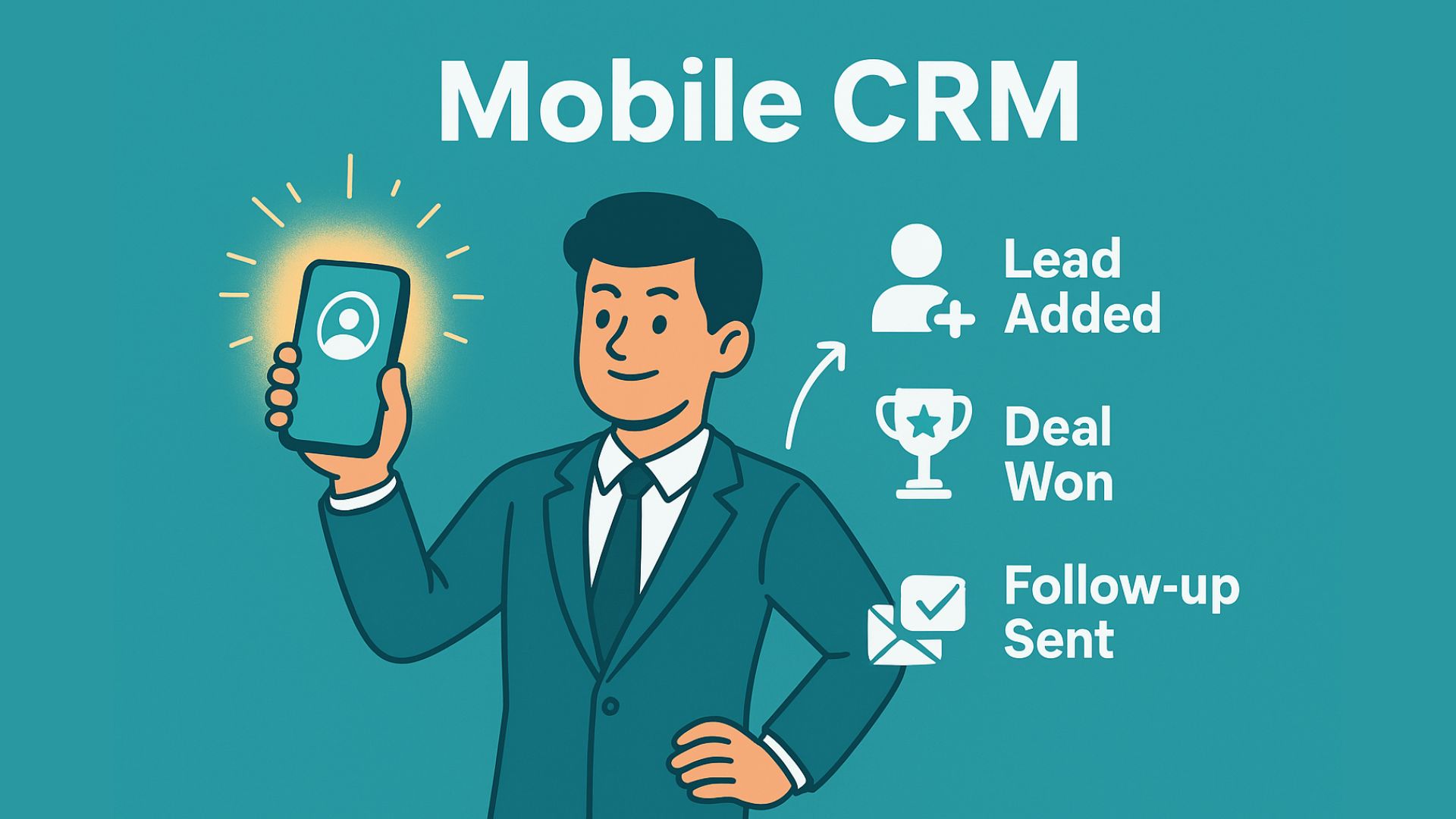


A CRM should live in the pockets of sales reps. Whether they are out in the field or want to log an immediate interaction with a potential customer, 24/7 access to this tool is crucial to achieve targets and boost business revenue.
Mobile CRM platforms allow sales teams to work, sell, update, and follow up directly from their smartphones - without waiting to return to a desk.
What is a mobile CRM?
Unlike desktop CRMs that assume stable connectivity and longer sessions, mobile CRMs are built for speed, accessibility, and short, high-impact interactions.
They prioritize quick data entry, offline access, camera and voice inputs, and instant synchronization - helping teams act while conversations are still fresh.
Businesses that enable mobile workflows win in two ways: speed and coverage.
A faster follow-up means fewer leads slipping through the cracks, clearer image capture and forms upload, all of which results in a speedy deal closure.
This need for speed is what drives sales organizations to choose AI-enabled CRMs like Superleap.
According to crm.org, 65% of the sales executives using a mobile CRM deliver their quota in comparison to 22% who don’t.
Who needs a mobile CRM?
- Field sales and distribution teams working across territories
- Real estate agents managing site visits and walk-ins
- Healthcare and home-service professionals logging visits
- Retail and pop-up teams capturing leads on-site
- Education counsellors handling walk-ins and follow-ups
Benefits of using a mobile CRM
- On-the-go access
- Faster follow-ups (especially for field agents in low-network areas)
- Instant information sharing
- Reduced friction between devices
How to choose the best mobile CRM?
Before selecting a mobile CRM app, ask:
- Is it mobile-first or just a desktop CRM squeezed into an app?
- Does it support offline mode?
- Can reps capture data in under 30 seconds?
- Does it support voice, camera, and scan inputs?
- Is it optimized for low connectivity environments?
- Does it integrate with backend systems?
- Can managers track field performance in real time?
- Does it improve speed or just accessibility?
How does a mobile CRM differ from desktop CRM?
While it is not possible to replicate every detail from a desktop CRM, speed and ease of adaptability should be top priority.
Use cases of a mobile friendly CRM across different departments
Field sales & distribution
Use-case: Territory reps capture orders on site, route plan, and send invoices.
Mobile feature needs: Offline order capture, barcode scanning, signature capture, route optimization.
With Superleap, you can effortlessly plan field routes, track GPS location and geo-fence tasks.
Real estate & property visits
Use-case: Agents take property photos, log client feedback, share listings instantly.
Mobile feature needs: Real estate CRMs have high-quality photo upload, geo check-in, log visit notes, WhatsApp sharing, quick lead creation, eSign offers on the spot, and push leads to back-office for finance checks - this shortens the sales cycle and reduces data loss at open houses.
Home services & healthcare
Use-case: Technicians log visit notes, collect patient or job photos, confirm completion.
Mobile feature needs: Healthcare CRMs must have forms with compliance checkboxes, attachments, time-stamped logs, offline mode.
Events & retail popups
Use-case: Capture leads on kiosks or via staff phones; scan badges or QR codes.
Mobile feature needs: QR/barcode scanning, quick-contact capture, instant sync to marketing & SMS.
Education / coaching centers
Use case: Counsellors log attendance details and visits, send automated follow-ups via phone or WhatsApp, capture walk-in & telephone leads.
Mobile feature needs: Education CRMs are expected to have lead capture forms, WhatsApp integration, follow-up automation, attendance tracking, and offline data sync for low-connectivity areas.
Superleap is purpose built for this area, focusing on high-volume capture and automated follow-ups.
Mobile CRM examples
- A field sales rep updates deal notes immediately after a client meeting
- A real estate agent uploads site photos and sends listings on the spot
- A healthcare worker logs visit details offline and syncs later
A mobile CRM is an investment for growth. The best way to pick one is shortlist the ones that meet your requirements and run a pilot. Build real workflows, test them for about 2-3 weeks and ultimately go with the one that your reps are using with ease and producing desirable results.

.jpg)

.jpg)
%201%20(1).svg)
.svg)
.svg)
.svg)
.svg)