
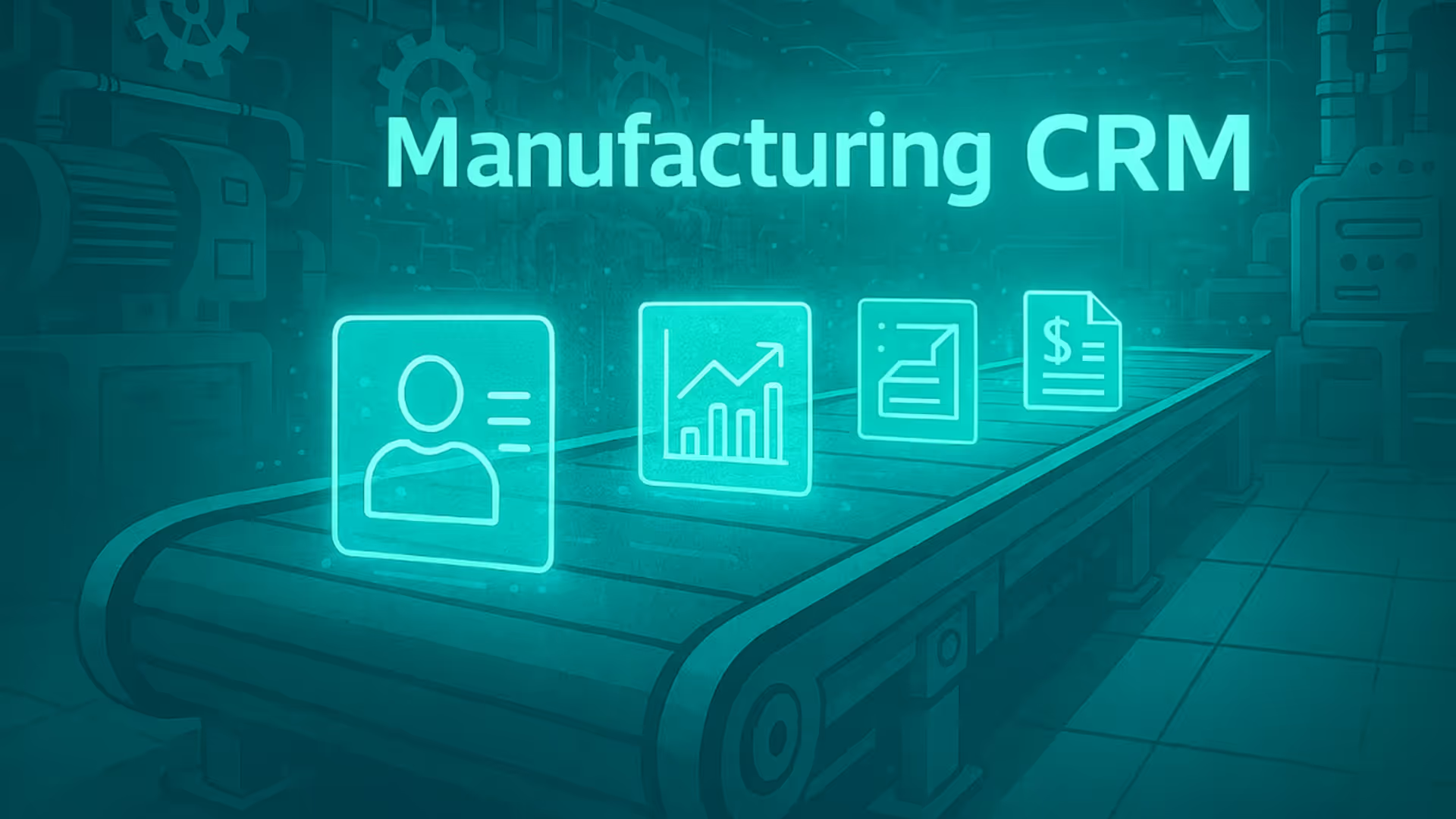


In a market where products look similar, the true differentiator isn’t machinery or materials; it’s customer experience. The manufacturers winning today are the ones who know their customers better than anyone else: what they want, when they want it, and how they want it delivered. A purpose-built manufacturing CRM gives you that superpower: turning every data point into insight and every interaction into loyalty.
This blog explains how using a CRM for a manufacturing industry is a game changer.
Key challenges in manufacturing sales
- Complex sales cycles with multiple stakeholders
- Channel partner management
- Demand fluctuations and inaccurate forecasting
- Lack of real time visibility into orders, pricing, inventory
- Manual and siloed communication
Top CRM for manufacturing industry
Superleap
Superleap is a modern, easy-to-use CRM that helps manufacturing businesses manage leads, distributors, and sales pipelines efficiently. It’s ideal for SMEs looking for fast adoption, automation, and better visibility without complex setup or high costs.
How CRM helps manufacturing companies?
Unified customer and partner management
Manufacturers deal with multiple stakeholders: OEMs, dealers, distributors, and end-customers. A CRM centralizes every interaction, making relationships easier to manage and ensuring collaboration stays smooth.
Smarter sales forecasting and production planning
CRMs analyze historical orders, pipeline data, and market trends to help predict demand accurately. This aligns the shop floor with sales, reducing stockouts, overproduction, and operational waste.
Quote and pricing optimisation
Integrated CPQ capabilities speed up complex quotations involving custom configurations, varied pricing, and discounts. Teams can generate accurate quotes faster and improve win rates.
Field service and after sales support
A CRM empowers service teams with asset history, warranty details, and remote support tools. Faster issue resolution improves customer satisfaction and long-term loyalty.
Distribution and channel sales visibility
CRMs provide real-time performance tracking across territories and partners. Manufacturers gain clarity into channel sales, dealer orders, and inventory status to make smarter decisions.
Lead management and distributor enablement
From capturing enquiries at trade shows to nurturing through distributors, CRMs ensure no lead is lost. Channel partners get enablement tools and quicker access to product and pricing information.
{{callout-3}}
How to choose the right CRM for manufacturing industry?
ERP/MES integration support
Your CRM should communicate seamlessly with ERP and MES systems to provide real-time access to inventory, pricing, delivery schedules, and production capacity.
Strong field service management
Look for CRM that includes technician scheduling and dispatch, spare parts management, warranty and AMC tracking, service history records. This helps strengthen after-sales revenue.
CPQ (Configure-Price-Quote) availability
Industrial products often involve customization. A CRM with CPQ automates proposal creation, ensuring accurate configurations, approved pricing, and faster quote turnaround, boosting your win rate in competitive deals.
Mobile accessibility
The CRM should give sales reps and service teams on-ground access to customer data, orders, and tasks from any device.
Built in channel partner management
Choose a CRM that supports partner onboarding and performance tracking, lead distribution and SLA enforcement, target and incentive management.
Localisation & multi currency
If you operate across regions, your CRM should adapt to local languages, tax structures, currencies and compliance standards. This ensures smoother adoption and consistent operations worldwide.
Conclusion
In manufacturing, products may be built in factories, but growth is built through relationships. The right CRM strengthens those relationships, giving your teams the visibility, speed and insights to serve customers better at every step of the journey.
Are you ready to upgrade how you sell and support your customers?
Explore how Superleap CRM can help your manufacturing business grow faster and operate smarter. Book a quick demo today
The measurable ROI of a manufacturing CRM
- Reduced operational waste
- Faster sales cycle
- Increased aftermarket revenue



.avif)
%201%20(1).svg)
.svg)
.svg)
.svg)
.svg)