


In sales, your relationships with clients and prospects are often personal and ongoing. So, when it's time to move on, how you exit matters. A well-written resignation letter can preserve professional relationships, protect your reputation, and ensure a smooth transition - all critical if you're planning to stay in the same industry.
This guide also includes a sales executive resignation letter template, examples for different situations, tips for writing your letter, and a sales handover checklist to help you leave your role without losing important customer or pipeline context.
What is a resignation letter?
The letter must be professional, concise, and clearly state your last day of work in the company.
In the case of a resignation letter for a sales executive, you might be responsible for client-relationships or handling important client data, and a clean handoff of your responsibilities is crucial. It also serves as proof for F&F settlement or your experience letter.
Components of a resignation letter
- Subject line & Salutation
- Statement of resignation (Body of the letter)
- Formal closing lines
- Your name and signature
1. Date
Include the date on which you are submitting your resignation. This creates a clear record of when your notice period begins.
2. Subject line
Use a direct subject such as “Resignation – [Your Name], Sales Executive” or “Formal Resignation Notice – [Your Name].”
3. Statement of resignation
State clearly that you are resigning from your position. Avoid making the reader search through the letter to understand why you are writing.
4. Last working day
Mention your exact last working day based on the notice period applicable to your employment.
5. Reason for leaving
A reason is optional unless your company's policy or process requires one. If you include one, keep it brief and professional.
6. Handover statement
For sales roles, briefly state that you will support the transition of active opportunities, accounts, customer conversations, and other responsibilities during your notice period.
7. Professional closing
Thank the organization or your manager for the opportunity and close professionally.
Resignation letter sample for sales executives
Resignation letter for sales executive

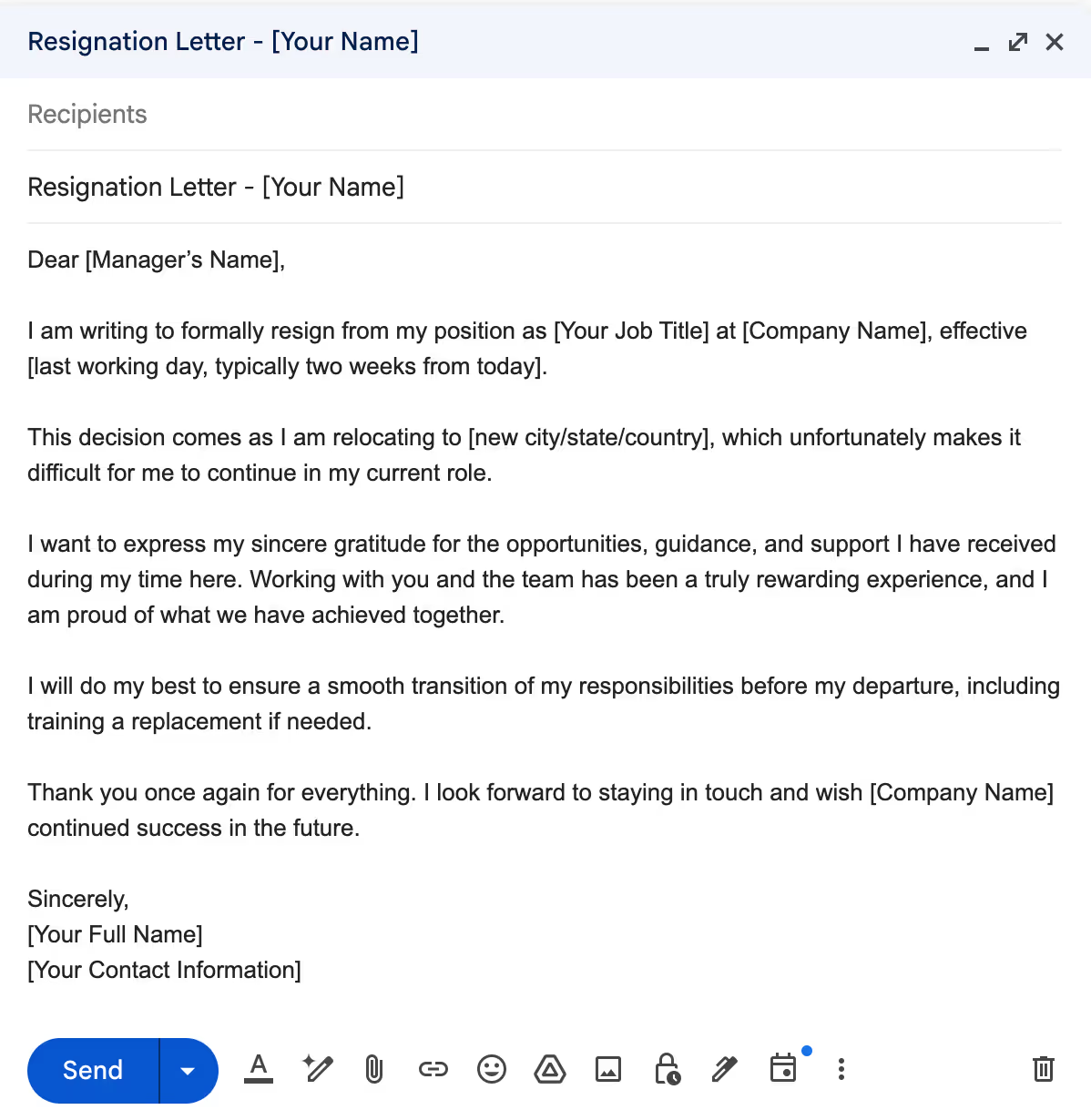
Resignation letter for relocation
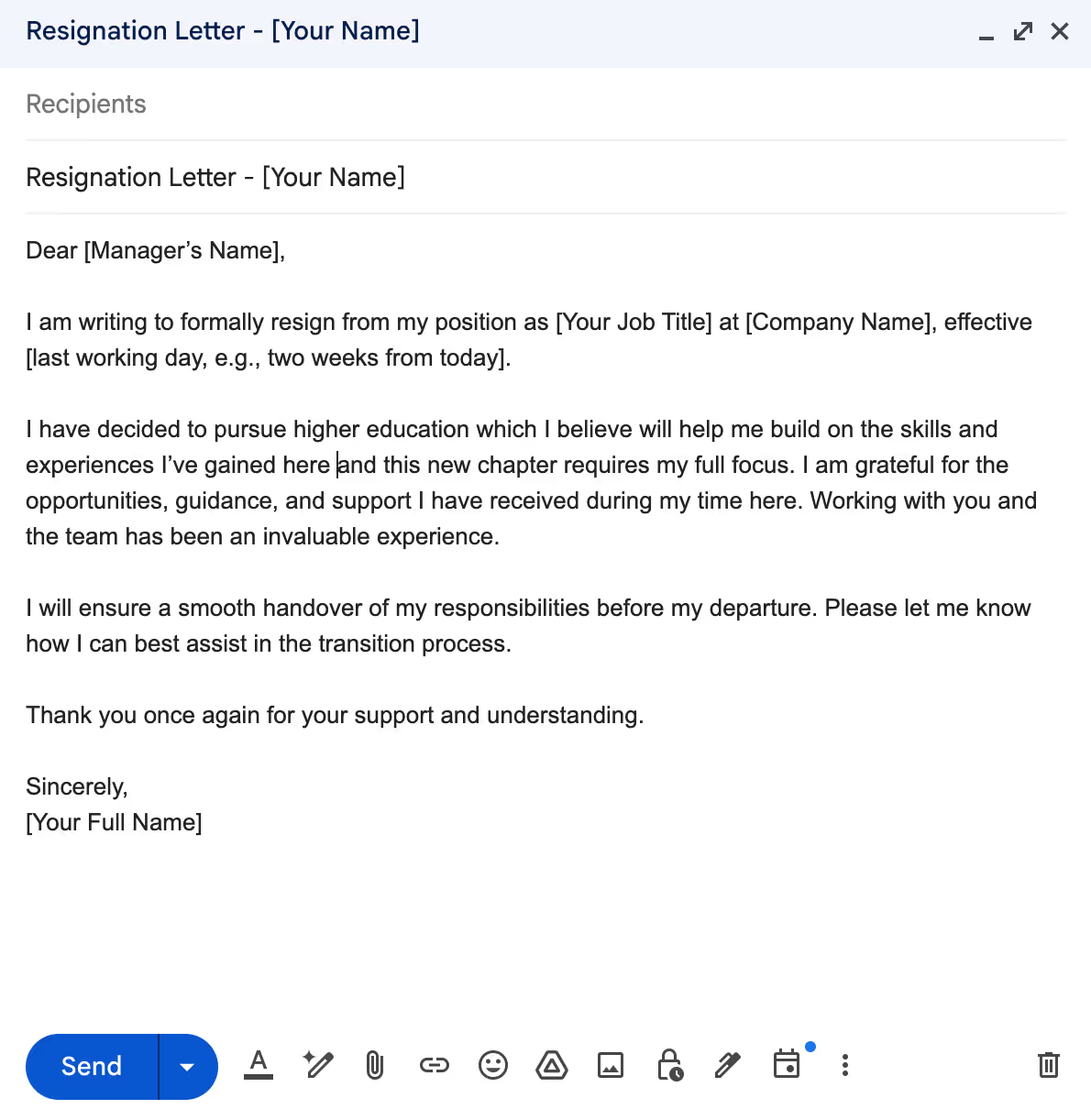
Resignation letter for higher education
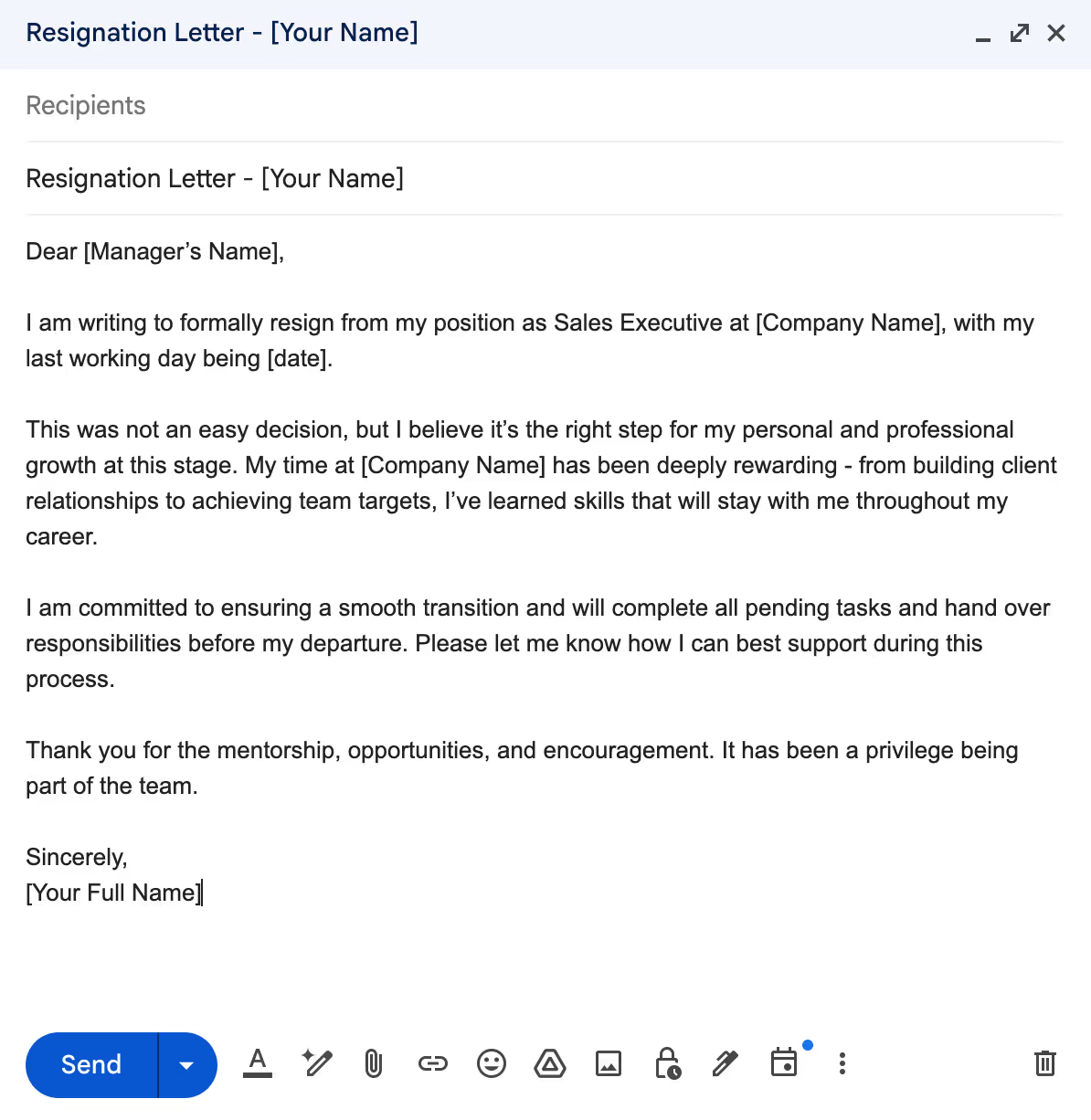
Resignation letter for personal growth
Do you need to mention your next move?
Only if you're comfortable. It's not mandatory. If your manager asks during the exit conversation, you can share it verbally. In your letter, you can keep the reason vague.
For example, you can say:
“I have decided to pursue a new career opportunity.”
“I am resigning due to relocation.”
“I have decided to pursue higher education.”
“I am resigning due to personal reasons.”
“I am moving on to pursue my long-term career goals.”
If your reason involves dissatisfaction with your manager, compensation, workplace culture, or another sensitive issue, it is usually better to discuss those concerns separately through the appropriate feedback or exit process rather than putting them into the resignation letter.
Best Time to Submit Resignation
- After pipeline handover: Wrap up key deals or pass them on smoothly to avoid disruption.
- Mid-week submission: Resigning on a Tuesday or Wednesday gives managers and HR time to plan transitions before the weekend.
- Avoid quarter-end crunch: If possible, steer clear of peak sales periods for a smoother exit.
If you are handling important accounts or active deals, it can also help to prepare your handover information before submitting your notice. That way, when your manager asks what needs to happen to your pipeline, you already have a clear picture of your open opportunities and customer commitments.
Your notice period may also affect when you can transfer accounts, attend customer meetings, complete proposals, or close out administrative responsibilities. Follow the terms of your employment agreement and your organization's resignation process rather than assuming that a standard two- or four-week notice period applies.
What should a sales executive hand over before leaving?
A sales executive can leave behind much more than a list of tasks. Active opportunities, customer conversations, proposals, follow-ups, and account history may all depend on context that exists primarily in the salesperson's head. A good handover turns that context into information the next owner can actually use.
1. Update your sales pipeline
For every active opportunity, make sure the CRM reflects the current stage, deal value, expected close date, key decision-makers, next step, and important risks or objections.
2. Document upcoming follow-ups
Record scheduled calls, demos, proposal follow-ups, renewal conversations, and other commitments so they do not disappear when ownership changes.
3. Organize account information
For important customers, document the people involved, current requirements, open issues, previous conversations, and relationship history.
4. Flag high-priority opportunities
Identify deals that are close to closing, tied to a specific deadline, or dependent on an upcoming customer conversation. This helps the next owner prioritize the pipeline instead of treating every opportunity equally.
5. Introduce the new account owner
Where appropriate, introduce the person taking over the account or opportunity. A short introduction can make the transition easier for the customer and reduce the feeling that they have suddenly been passed between people without context.
6. Clarify outstanding commercial commitments
Make sure your manager or successor knows about pending proposals, negotiated terms, promised follow-ups, discounts under discussion, or other commitments that could affect the next stage of the deal.
What happens to sales commissions after resignation?
If your compensation includes commissions, incentives, or bonuses, review your employment agreement and commission policy before leaving. The treatment of pending or earned commissions can depend on your company's compensation terms and when a commission is considered payable.
Keep records of relevant commission statements, active deals, expenses, and incentive documentation. If you have questions about pending payments, discuss them with HR, payroll, or your manager before your last working day rather than assuming how they will be handled.
Common mistakes to avoid
Don’t use harsh or emotional language.
Avoid blaming your manager or company.
Don’t disclose too many personal reasons.
Never leave abruptly without notice or handover.
Quick checklist for resignation lettermsubmission
Proofread for grammar and tone.
Add your manager's name and correct last working day.
Make sure your contact details (if included) are updated.
Save a PDF version for your own records.
Send it during business hours, ideally after a conversation with your manager.
Confirm notice period compliance with HR policy.





%201%20(1).svg)
.svg)
.svg)
.svg)
.svg)