



AI in sales enablement refers to the use of artificial intelligence to help sales teams train faster, personalize content, analyze buyer behavior and improve deal outcomes.
As Melanie Mitchell says in her book(Artificial Intelligence: A Guide for Thinking Human), “While AI can automate many tasks, it can’t replicate the empathy, creativity, and critical thinking that humans bring to the table.” This idea sits at the heart of AI in sales enablement. AI isn’t here to replace sales teams; it’s here to amplify their efforts. By taking over repetitive tasks, analyzing complex data and offering actionable insights, AI frees reps to focus on what truly drives deals forward: building relationships, understanding buyer needs, and delivering human value.
AI-powered sales enablement has become less of an advantage and more of a necessity.
This blog discusses its core components, benefits and implementation process.
What is AI sales enablement?
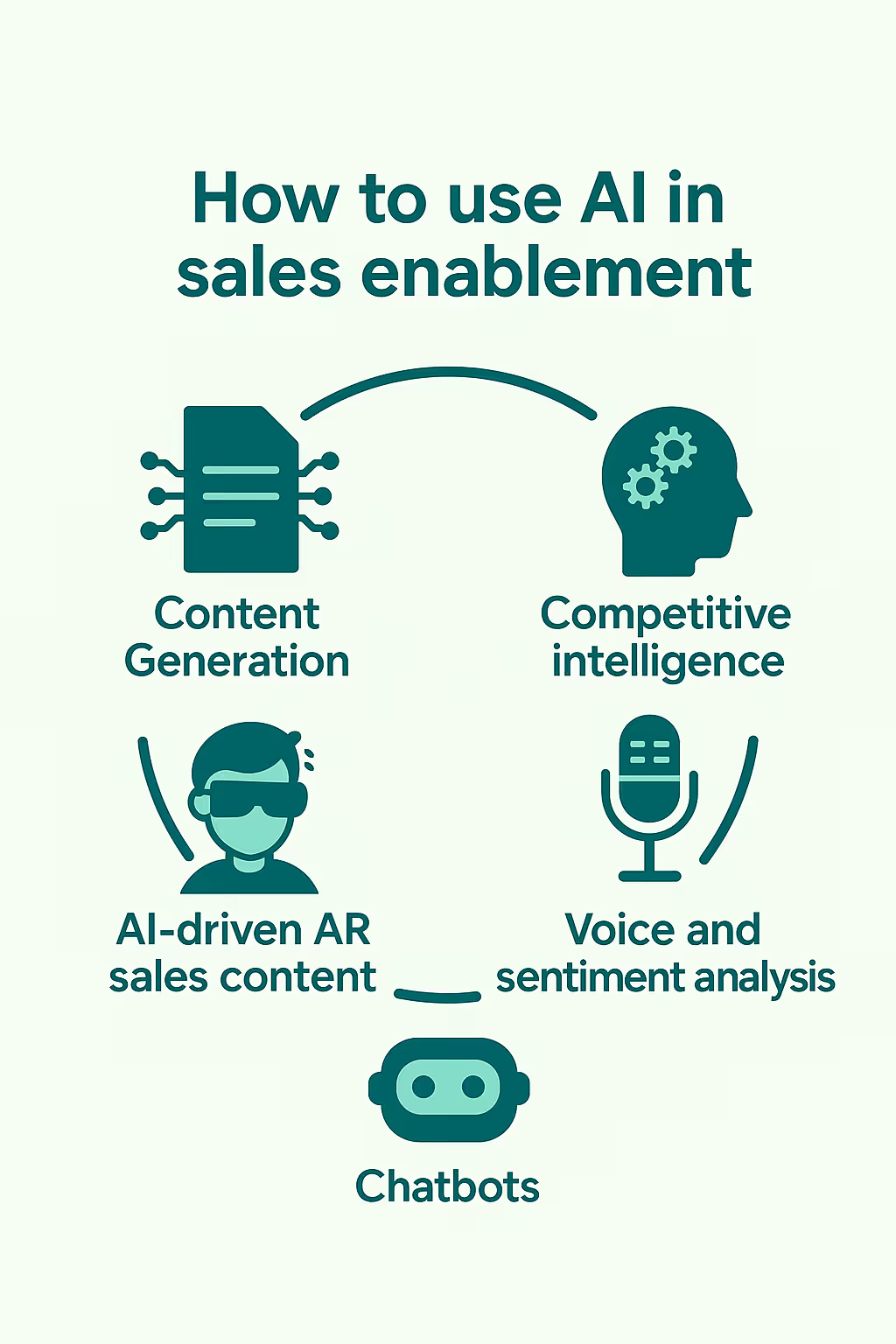
Core components of AI sales enablement
Process automation
AI handles routine tasks like activity logging, follow-ups, reminders and email sequences, reducing manual work and keeping the pipeline moving.
Predictive scoring
Ranks leads and deals based on likelihood to convert, helping reps prioritize high value opportunities.
Intelligent content suggestions
AI recommends the best performing sales materials for each stage of the buyer journey.
Conversational intelligence
AI analyses sales calls to identify objections, intent signals, and coaching opportunities.
AI powered coaching
Personalised insights help reps improve pitch quality, response handling and overall sales technique.
{{callout-3}}
Benefits of AI for sales enablement teams
- Higher sales productivity
- Stronger buyer engagement
- Better decision making
- More accurate revenue planning and faster revenue cycles
- Improved rep performance
- Enhanced customer experience
How AI is used in sales enablement strategy
Identify issues in your current process
Map out where reps lose time or face inconsistencies whether it’s slow follow-ups, poor content access or unclear deal visibility. These pain points help you pinpoint where AI can add the most value.
Choose one use case to begin with
Start small by selecting a single AI application such as lead prioritization, call analysis or automated outreach. This keeps adoption simple and helps you prove quick ROI.
Integrate AI with your existing systems
Ensure that the AI tool connects smoothly with your CRM, communication platforms and content hubs. This ensures that data is accurate and avoids duplication.
Train reps on how to use AI insights
Show your team what AI surfaces (signals, alerts, suggestions) and how to apply those insights in real conversations and daily workflows.
Set clear metrics to track improvement
Define what success should look like whether it's faster response times, higher conversions, or improved forecast accuracy. Track these metrics consistently to measure impact.
Expand usage gradually
Once your first use case shows results, introduce additional AI capabilities. Scaling slowly helps your team adapt and ensures each new layer adds meaningful value.
Review consistently
Regularly evaluate what's working, what needs adjustment, and how the team is responding. This ensures alignment with changing goals and market conditions.
AI sales enablement vs Traditional sales enablement
Challenges of using AI in sales enablement
Data quality issues
AI relies heavily on clean, consistent data. If your CRM is incomplete or outdated, the insights AI generates may be inaccurate or misleading.
Cost and resource constraints
Advanced AI tools can be expensive and may require additional technical support. Smaller teams need to ensure the investment aligns with real business needs.
Overdependence on AI insights
While AI helps with predictions and recommendations, it shouldn’t replace human intuition. Teams must balance automated guidance with real-world experience.
Continuous optimisation needs
AI models improve over time but only with ongoing monitoring, updated data and regular calibration. Without maintenance, performance can decline.
Conclusion
Ultimately, AI in sales enablement is the strategic force multiplier for the modern sales team. It moves the focus from manual data management to high-value human interaction. Leveraging AI for tasks like accurate forecasting and intelligent coaching ensures your team is always working on the right deals with the right message.
AI in sales forecasting
AI helps transform sales forecasting from a manual, error prone process into a highly accurate, data driven one.
Here’s how AI is specifically applied to sales forecasting:
- Predictive scoring and pipeline insights: By automatically scoring leads and opportunities and providing a dynamic, real-time view of pipeline health, AI moves forecasting beyond static spreadsheets and subjective rep input to deliver data-driven predictions.
- Data quality automation: A clean CRM is critical for accurate forecasting, AI powered systems handle routine data hygiene tasks like activity logging, updating contact details and ensuring compliance, meaning the forecast is always based on best available data.
Deal-level risk analysis: Beyond scoring the lead, AI can assess the specific risks for each deal in the pipeline (e.g. changes in buyer behaviour, stalled activity or a recent competitive mention on a call). This real time risk flagging helps sales managers intervene before a deal slips, directly improving forecast reliability.





%201%20(1).svg)
.svg)
.svg)
.svg)
.svg)